Australia's Online Safety Regulator Tells Smart Glasses Makers to Blur Strangers' Faces by Default
eSafety has called on companies like Meta to build automatic face-blurring into camera-equipped smart glasses, warning that privacy can't be traded away for accessibility.
Key points
- Australia's eSafety Commissioner published formal advice on Monday urging smart glasses companies to blur bystanders' faces automatically.
- The regulator singled out Meta's Ray-Ban smart glasses as an example of the technology under scrutiny.
- ESafety warned companies may use accessibility benefits for blind and low-vision users as cover for avoiding privacy safeguards.
- The Australian federal government is facing calls to ban smart glasses with cameras outright.
- No data breach occurred; the concern is the passive, continuous collection of images of people who never agreed to be filmed.
Smart glasses that record video, worn like ordinary eyewear, are drawing sharp attention from Australian regulators. On Monday, eSafety, Australia's government body responsible for online safety, published formal advice telling makers to add automatic face-blurring by default and to make it far more obvious when recording is in progress.
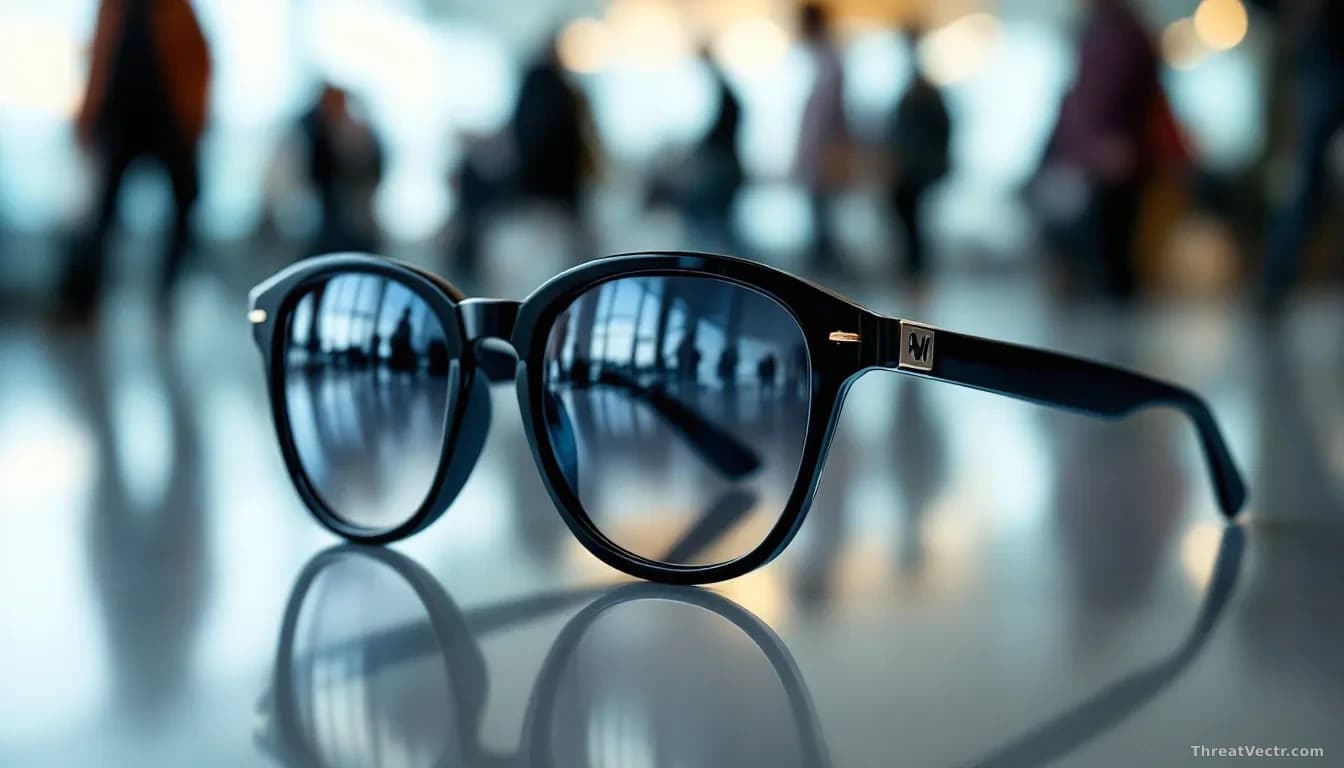
The advice names Meta's Ray-Ban glasses as a prominent example. They look largely identical to standard sunglasses but contain a small forward-facing camera that can stream or record whatever the wearer sees.
Why does this matter to ordinary people on the street?
Anyone near a wearer could be filmed without knowing it. Unlike a phone held up to record, smart glasses give no obvious signal that a camera's active.
ESafety's concern is straightforward: the people being filmed never consented. There's no notification sound, no visible lens flip, no obvious red light. The regulator wants companies to blur bystanders' faces automatically in saved footage and to add a clear visible or audible cue when recording starts.
ESafety also raised a concern about how companies frame the debate. Its published advice warned that businesses might pit "accessibility benefits against safety and privacy considerations." That's a reference to a genuine use case: camera-equipped glasses can help blind or low-vision people read signs or identify familiar faces. The regulator isn't dismissing that value. It's saying that benefit can't be used as a shield against building in privacy protections.
What could regulators actually do?
The federal government faces pressure to go further than guidance and ban the devices outright. We covered the parliamentary bill that followed two mass petitions on 30 August, in our report on Australia's moves against spy glasses. No legislation has passed yet.
ESafety's current advice carries no legal force on its own. It's a signal to industry of what the regulator expects, and a public marker against which future enforcement or legislation could be measured.
| Issue | eSafety's Position |
|---|---|
| Face recording without consent | Automatic blurring of bystanders required by default |
| Unclear recording status | Visible or audible cue mandatory when filming |
| Accessibility argument | Legitimate, but cannot override privacy obligations |
| Legislative action | Not yet; government faces pressure to go further |
Jurisdiction sits with eSafety under the Online Safety Act 2021, though broader privacy obligations for companies collecting Australians' biometric data, information that can identify a person from their face, also fall under the Privacy Act 1988 regulated by the Office of the Australian Information Commissioner.
Should you worry?
There's no breach to respond to here. No passwords to change, no accounts to check. The practical steps are quieter.
If you see someone wearing smart glasses in a public space and feel uncomfortable, you're within your rights to ask whether they're recording. Current Australian law doesn't clearly prohibit filming in public, which is exactly why regulators are pushing for technical fixes rather than waiting for the law to catch up. The supermarket facial-recognition trials we reported on 20 August show the same pattern: collection first, consent framework later, if at all.
The thing worth watching here isn't the guidance itself, which is toothless for now. It's whether the draft privacy laws covering smart glasses and AI data use, flagged in our 31 August story on Australia's new privacy bill, give eSafety teeth to enforce any of this.