Western Australia Deploys Live Facial Recognition at Bus Station, Makes First Real-Time Arrest
A camera on a police van scanned hundreds of faces a minute at a Perth transit hub. Civil liberties groups say the trial raises serious questions about bias, accuracy, and surveillance creep.
Key points
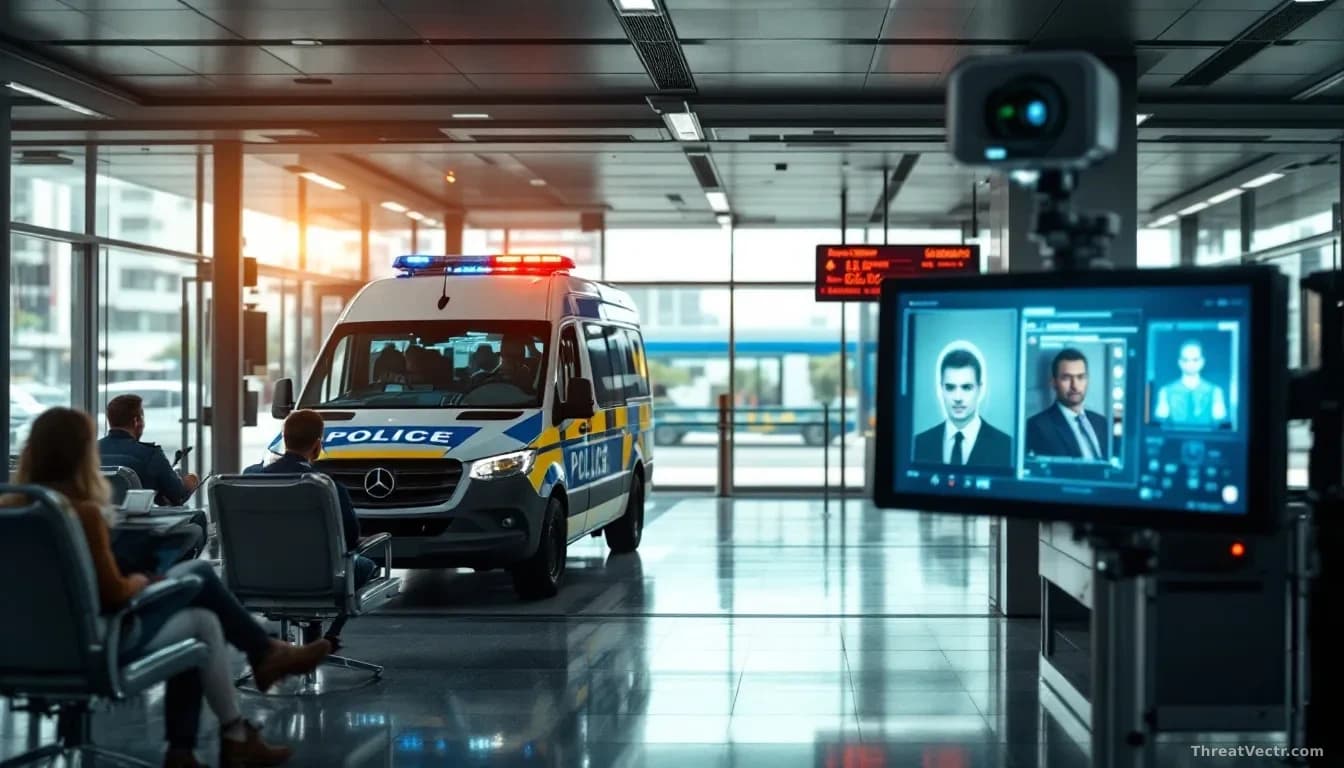
- Western Australia Police ran a live facial recognition trial at Perth's Mirrabooka bus station on Thursday 2 July 2026.
- The camera system can scan hundreds of faces per minute, checking them against a database of approximately 4,000 people.
- That database covers people with outstanding arrest warrants, registered child sexual abuse offenders, and missing persons.
- An arrest was made in real time while the state's police commissioner held a press conference at the same location.
- Critics warn the technology risks false identifications, racial bias, and gradual expansion of surveillance well beyond its stated purpose.
While Western Australia's police commissioner, Col Blanch, answered questions from reporters at Perth's Mirrabooka bus station on 2 July, a camera mounted on a marked police van was already at work. It was scanning every face in the busy interchange, checking each one against a database of roughly 4,000 people. Someone flagged by that system was arrested before the press conference ended.
Facial recognition software analyses the geometry of a person's face and tries to match it to a stored photo. It works silently, at distance, without the subject's knowledge or consent.
Should members of the public be worried?
That depends entirely on how the system is used, and for how long. Right now the WA Police database holds three categories of people: those with active arrest warrants, registered child sexual offenders, and missing persons. Most people walking through Mirrabooka won't appear in any of those lists.
Critics raise four concerns worth understanding.
First, accuracy. Facial recognition systems have recorded measurably higher error rates for women and people with darker skin tones in independent testing. A false match could mean an innocent person is stopped by police.
Second, transparency. Passengers at the interchange on 2 July didn't know their faces were being scanned.
Third, data handling. How long face-scan data is stored, and who can access it, remains unresolved.
Fourth, what privacy advocates call function creep: a tool introduced for one narrow purpose gradually applied to wider ones. We covered that dynamic on 5 July in our reporting on Flock Safety's licence-plate cameras, where communities were cancelling contracts over exactly that concern.
Guardian Australia, which first reported the story, noted the arrest happened in real time as the commissioner spoke. Police framed it as proof the technology works. Opponents framed the same moment as proof the rollout was politically staged.
Should you watch this beat?
Yes. A database that starts at 4,000 warrant-holders can expand quietly. If you pass through Mirrabooka or similar transit points in Western Australia, you may be scanned and you can't opt out. If you think you've been wrongly identified, record the time, the location, and the officer's details, then contact a civil liberties organisation.
The arrest was real. So is the question of what gets added to that database next.