Kmart's $89 Camera Glasses Sold Out Across Australia. Privacy Experts Are Alarmed.
Smart glasses that secretly record HD video retail for less than a restaurant dinner. Digital rights advocates say the law hasn't kept up.
Key points
- Kmart Australia sold out of Anko-branded camera glasses, priced at AUD $89, in stores and online as of Monday.
- The glasses look like ordinary black-rimmed frames but can capture still images and record high-definition video.
- A digital rights expert described the product as a "privacy nightmare" because bystanders can't tell they're being filmed.
- No Australian federal law currently requires a private individual to disclose that they're recording someone in a public place.
- The glasses undercut Meta's Ray-Ban smart glasses on price by a wide margin.
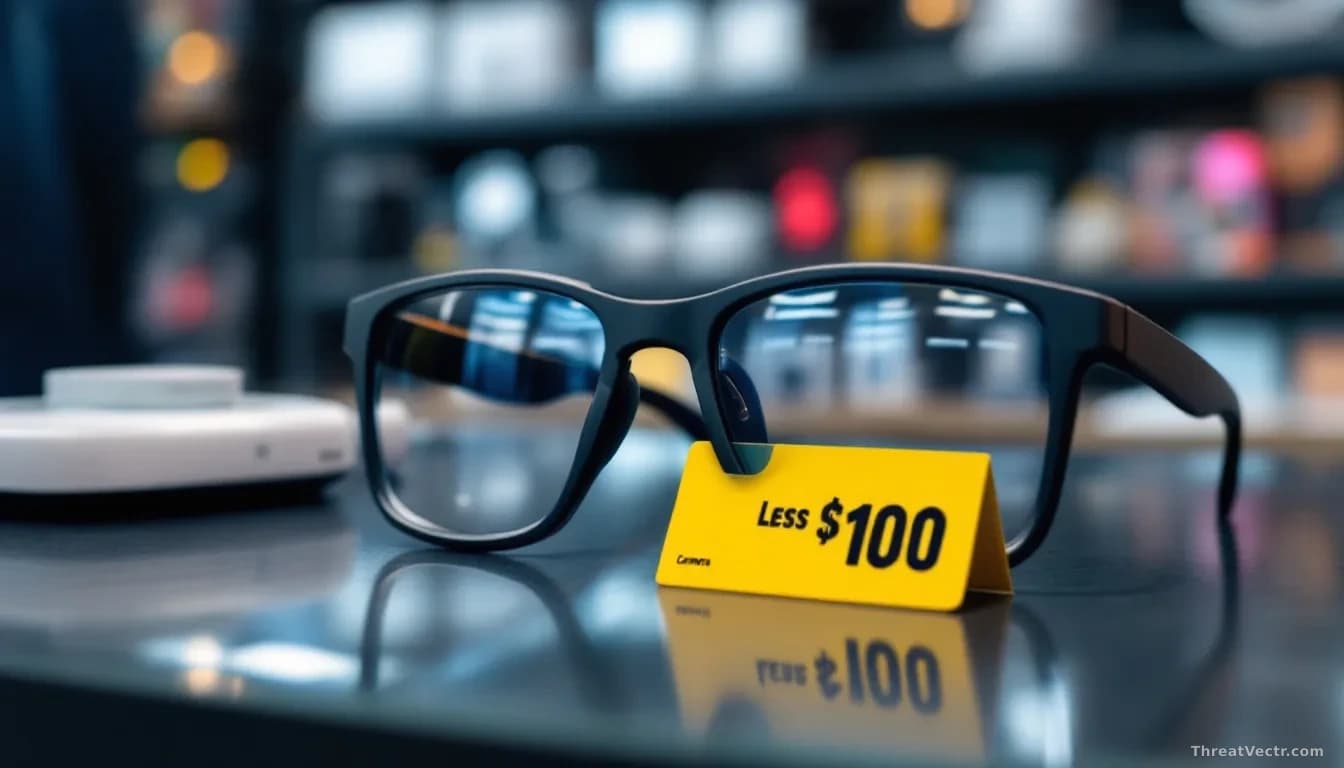
For less than ninety dollars, anyone in Australia can own glasses with a built-in camera capable of recording high-definition video. They look completely normal. No obvious lens, no indicator light, nothing to signal the wearer is filming.
Kmart Australia's Anko-branded smart glasses, clear-lensed with a plain black rim, sold out in stores across the country and on the retailer's website as of Monday. Guardian Australia first reported the sellout.
Should ordinary people be worried?
Yes, in practical terms. A digital rights expert quoted in the original reporting called the situation a "privacy nightmare," because anyone nearby can be filmed without knowing it.
Conventional cameras and phones held up to record give bystanders a visual cue. Glasses don't. Someone sitting across from you on a train or standing behind you in a queue could be capturing your face and your conversation with no outward sign at all.
We covered the office version of this problem on 28 July, when Samsung's entry into AI-powered glasses forced security leaders to confront an uncomfortable truth: as that story found, a ban probably makes things worse.
The Anko product isn't illegal to sell. That's precisely the problem.
What does Australian law actually say?
Australia's privacy framework wasn't written with always-on wearable cameras in mind. The Privacy Act 1988 governs how organisations handle personal data but places few direct obligations on private individuals filming others in public. State-level surveillance laws vary and most were drafted long before consumer recording hardware became this small and this cheap.
No regulation currently forces a private buyer of these glasses to disclose that recording is happening. That gap isn't new, but a product at a mass-market price point in a major discount chain reaches a far wider audience than a niche spy-gear website ever did.
What can people do about it?
There's no reliable way to detect whether someone nearby is wearing camera glasses. Honest answer, and it matters.
What's practical: in settings where filming would be harmful, a medical consultation or a private legal meeting, you can ask participants to remove eyewear, much as some venues already ask people to silence phones.
Digital rights groups have been pushing for privacy law updates that would cover this category of consumer hardware. That sellout will add pressure to the conversation. Any legislative response, though, would move through a rulemaking process measured in months or years, not weeks.
Regulation chases technology. It's been true on every beat this writer covers, and these glasses are only the latest proof.
Common questions
Are these glasses illegal to buy or wear in Australia?
No. Selling and buying the glasses is legal. Whether recording a specific person in a specific context crosses a legal line depends on state law and circumstance, but owning the glasses is not an offence.
How is this different from someone filming on a phone?
A phone held up to record is visible. These glasses are designed to look like ordinary eyewear, so the person being filmed has no reasonable way to notice or object in the moment.