You Probably Can't Spot an AI Fake Face. Researchers Think They Can Teach You
A team of scientists across three countries is testing whether ordinary people can be trained to tell real faces from AI-generated impostors. The early results are cautiously encouraging.
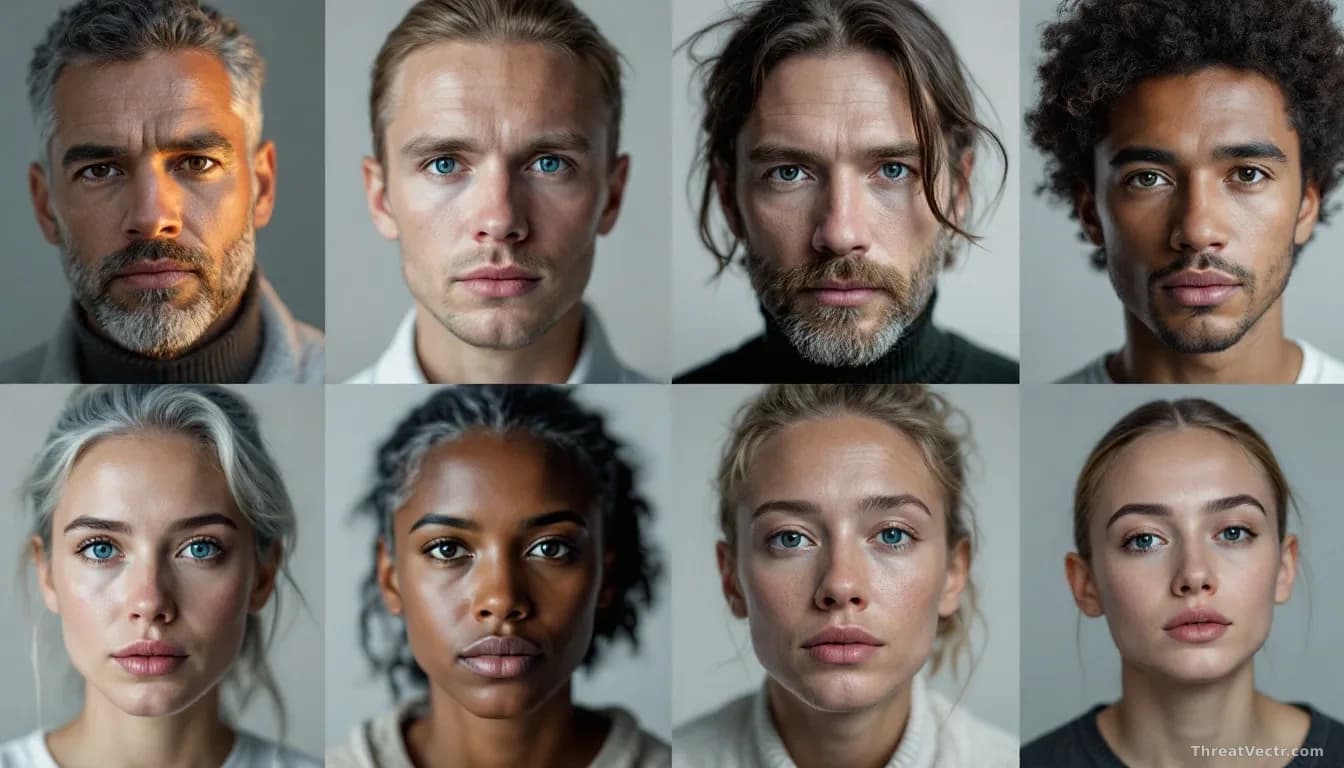
Key points
- AI-generated fake faces now fool most people on first glance, according to researchers at the Australian National University.
- Training people to look for obvious flaws like extra fingers no longer works reliably, because AI image tools have improved enough to avoid those errors.
- A research team working across Australia, Canada and the UK is developing more subtle detection methods that show early promise.
- Professor Amy Dawel, director of the ANU Emotions and Faces Lab, is leading the study.
Spotting a computer-generated face used to be straightforward. The AI would slip up: an extra finger, a melting ear, teeth that didn't quite fit. Fraudsters using fake profile photos to impersonate people online were, at least sometimes, caught out by those glitches.
That window is closing.
Professor Amy Dawel, director of the Emotions and Faces Lab at Australian National University in Canberra, says training people to hunt for visual oddities has run its course. "Training on visual artifacts, like looking for a sixth finger or odd earrings, has had limited success, partly because the AI is getting too good, and fraudsters may avoid using pictures with obvious flaws anyway," she told BBC News.
Dawel leads a research team studying whether people can still learn to reliably identify AI-generated faces. The short answer is yes, but the method has to change.
Why does this matter to ordinary people?
Fake faces are not an abstract problem. Fraudsters use convincing AI portraits to build false identities on dating apps, job platforms and social media. We reported on 10 July how criminals used AI-generated images to extort a missing man's family, demanding $6,000, a case that illustrates exactly how far this tactic has moved beyond catfishing.
The old advice, check if the ears look melted or count the fingers, is no longer enough. AI image generators improved precisely because researchers and the public kept flagging those mistakes. The systems adapted. The obvious tells vanished.
Dawel's team is now focused on subtler cues. Their work, first reported by BBC News, suggests that with the right guidance, people can still learn to distinguish real faces from generated ones. The research hasn't yet identified a single reliable trick to share publicly, partly because publishing a checklist would hand fraudsters a guide to what to fix next.
Should you worry about your own photos?
For anyone receiving an unsolicited message from an unfamiliar face: be sceptical of new online contacts you have never met in person, particularly if they avoid video calls or have very few older photos. A reverse image search, uploading a photo to a search engine to check where else it appears, can sometimes catch a recycled fake.
The technology creating fake faces is moving faster than most people's ability to detect them. Researchers are working to close that gap. The uncomfortable truth is that until they publish something actionable, a healthy pause before trusting a stranger's profile picture is about all any of us have.