US Treasury Sanctions Iran-Linked Hackers Tied to Critical Infrastructure Attacks
Washington widens its economic squeeze on Tehran, naming operators behind intrusions into water, energy and other essential services.
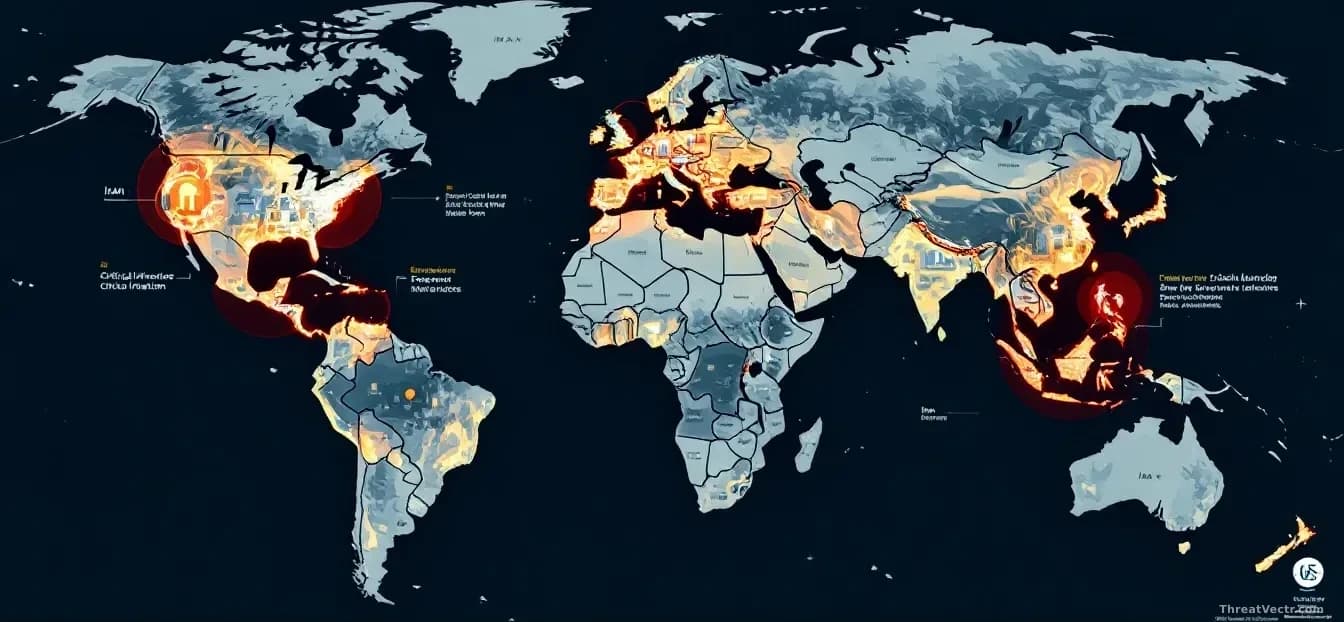
Key points
- Treasury's Office of Foreign Assets Control added Iran-linked cyber operators to its blocked list, citing intrusions at critical infrastructure targets.
- Officials framed the action as part of a "whole-of-government, economic campaign" targeting Iran and those who finance it.
- Sanctioned individuals and groups are connected to break-ins at water utilities, power operators and fuel distribution systems.
- Sanctions freeze any U.S. Assets and effectively lock named actors out of the dollar-based banking system.
- The move raises the cost of operating for Tehran's cyber units but does not stop intrusions on its own.
Treasury's turning the money tap off on another batch of Iranian hackers.
The Office of Foreign Assets Control, the Treasury arm that administers financial sanctions, added Iran-linked cyber operators to its blocked list this week. Officials say the named individuals and entities have been involved in breaking into critical infrastructure: computer systems running essential services like water treatment and fuel distribution.
In a statement carried by The Hacker News, Treasury called the action part of a "whole-of-government, economic campaign" against Iran. "We are launching an economic onslaught against Iran's financial connections around the globe," the department said. "Our objective is to sever every economic lifeline that sustains this tyrannical regime."
Strong words. Sanctions are a slow-acting tool, not a kill switch.
What did the sanctioned hackers actually do?
Treasury says the named operators are tied to intrusions at critical infrastructure targets: small water utilities running exposed industrial control panels, energy firms with weak remote-access setups, manufacturers using default passwords on internet-facing devices. We covered both angles on 3 August, reporting on attacks across at least seven US states and a separate wave hitting roughly 30 water systems, so the targets named this week aren't a surprise.
The failure mode is almost always identical. An operator leaves a control system reachable from the public internet, the login is either the vendor default or close to it, and a crew scans and walks in. Post-mortems keep saying the same thing: these aren't deep, clever attacks. They're opportunistic hits on soft targets that sit inside essential services.
What do sanctions like this really change?
Directly, not much for the hackers. They're unlikely to hold U.S. Bank accounts. What sanctions do is make it harder for exchanges, shell companies and front firms to move money on their behalf without getting cut off from the dollar system.
That matters because state-linked cyber operations aren't free. Crews rent servers, buy tools and cash out through cryptocurrency exchanges that need banking relationships. Sanctions squeeze that middle layer.
Honest read: this raises the cost of doing business for Tehran's cyber units. It doesn't stop the intrusions. New Zealand reached the same conclusion last month when it sanctioned 33 Russia-linked cyber operators and framed digital warfare alongside human-rights abuses on its own penalty list.
Should ordinary people worry?
Not in a panic, no. A sanctions announcement won't change your water bill or your tap. Expect more of the same over the next year: occasional local outages tied to intrusions at small utilities that never had a proper security budget. The four-day shutdown of a UK power plant on 24 August is the cleaner illustration of what a determined crew can do when it finds a soft target.
If you work at one of those utilities, the message is blunt. Assume you're on the target list. Get remote-access accounts off default credentials, put multi-factor authentication in front of anything internet-facing, and pull control systems off the public network where you can.
Sanctions buy time, not safety. The patching has to happen on your end.