Trump Signs Emergency Order to Block Foreign-Made Backdoors From US Power Grid
Executive Order 14420 bars untrusted foreign equipment from America's high-voltage electricity network, citing hidden remote-access capabilities that could let hostile governments cut the lights.
Key points
- President Trump signed Executive Order 14420 on Wednesday, declaring a national emergency over foreign-supplied equipment in the US power grid.
- Any acquisition, import, or installation of flagged foreign power equipment initiated after 26 August 2026 is prohibited.
- Covered hardware includes transformers, inverters, and industrial control systems running transmission lines rated at 69 kilovolts or higher.
- The order does not name any country, but its structure closely mirrors a 2020 rule that specifically targeted Chinese entities.
- The Department of Energy can order grid operators to isolate or replace equipment already in service if it poses a security risk.
Hidden inside some of the infrastructure that moves electricity from giant generating stations to cities, officials say, is equipment built abroad with remote-access capabilities a foreign government could switch on at will. Wednesday's executive order is Washington's attempt to close that door.
Trump signed Executive Order 14420, invoking a national emergency under the International Emergency Economic Powers Act, a law giving the president broad authority to restrict foreign trade when national security is at stake. The White House cited explosive growth in data centres, AI facilities, and defence manufacturing as reasons the grid's reliability has never mattered more. A deliberately triggered remote shutdown could ripple through all of them at once.
What equipment does the order actually cover?
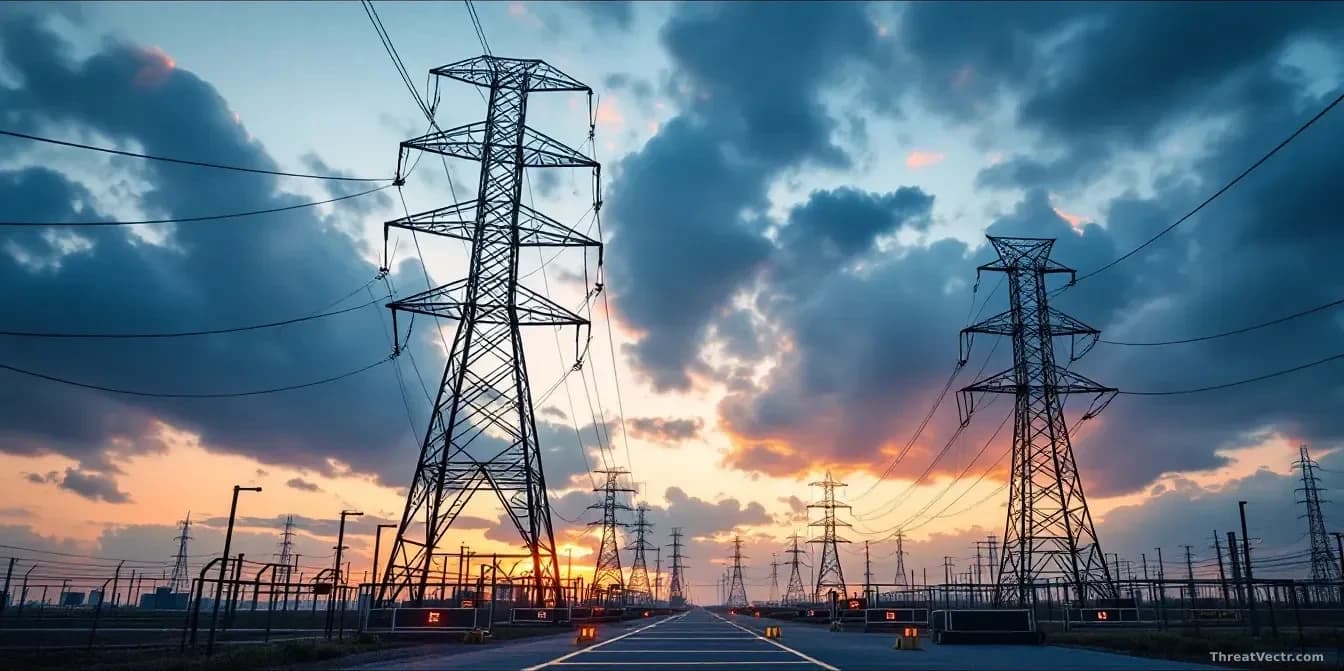
The rule targets the bulk power system, the high-voltage backbone of the grid, not the local lines running to your home. Transmission lines at 69 kilovolts or higher fall under the order, as do the devices controlling them.
| Category | Examples | Concern |
|---|---|---|
| High-voltage hardware | Transformers, inverters | Backdoors allowing remote shutdown |
| Control systems | RTUs, PLCs, safety systems | Unauthorised remote operation |
| Software layer | Firmware, remote-access tools | Malicious updates or silent takeover |
Covered devices include transformers, inverters, energy storage systems, and industrial control systems such as remote terminal units (RTUs) and programmable logic controllers (PLCs), the computerised devices that open and close switches across the grid. Associated firmware and remote-access tools are included too.
Who is actually being targeted here?
The order names no country. Its language and architecture are nearly identical to a 2020 Trump-era bulk-power order that led the Department of Energy to formally prohibit equipment linked to Chinese entities. The Biden administration later revoked that prohibition following a review.
Chinese state-backed hackers have been caught inside US grid networks, sitting quietly to gather intelligence. This order signals a different concern: hostile nations may not need to hack their way in if they already manufactured the equipment and embedded access from the start. Three days before the order, our report on Iran-linked hackers knocking a UK power plant offline for four days showed how quickly a single intrusion can darken critical infrastructure. The supply-chain approach this order targets is harder to detect and harder to evict.
What happens to equipment already installed?
Existing kit isn't automatically ripped out. The Department of Energy gains authority to assess hardware already on the grid and, following consultation with defence and intelligence leaders, can require operators to identify, disconnect, or replace specific components if they pose a risk. Officials can also publish a list of pre-approved vendors whose equipment is cleared for use, giving utilities a straightforward path to compliance.
For ordinary electricity customers, no disruption is expected from the order itself. The practical effect will play out over years as utilities plan new infrastructure purchases.
Should you worry about this?
If you work for a utility or any organisation that depends on continuous power, now's a reasonable time to ask your procurement team whether planned equipment orders fall inside the 26 August 2026 deadline and what your vendor's country of manufacture actually is. The prohibition doesn't kick in tomorrow, but the audit should.
The order's real significance isn't the ban itself. It's the acknowledgement that the threat may already be inside the fence.