Trump Declassifies Election Fraud Claims: What Was Actually Said
President Trump addressed the nation on election security, citing newly declassified material and pointing a finger at China. Here is what we know, and what remains unverified.
Key points
- President Trump delivered a nationally televised address focused on election integrity and alleged voter fraud.
- Trump stated that government documents, previously classified, had been officially cleared for public release to support his claims.
- Accusations were directed at China, alleging involvement in undermining U.S. Election infrastructure.
- NBC News correspondents covered the address without independently verifying the underlying declassified material.
- No specific breach confirmations or named security researchers were cited.
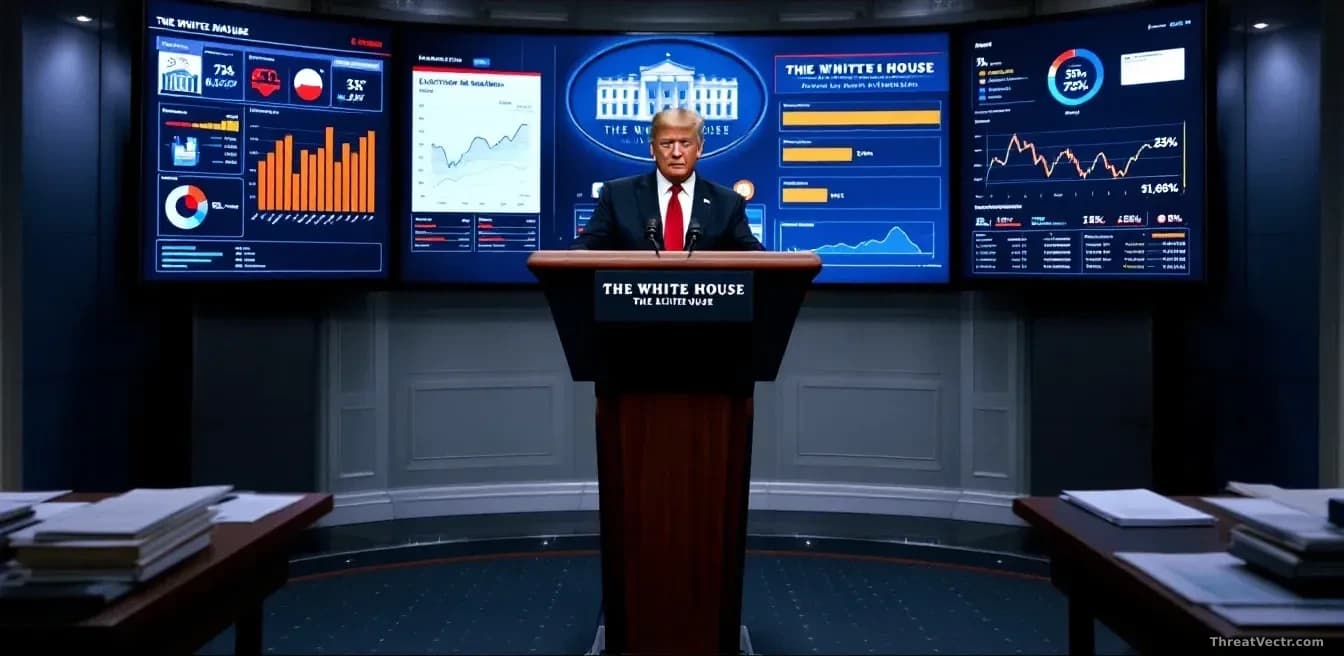
President Trump stood before cameras and told the country elections had been tampered with. He said the proof was now declassified. That word matters: it means documents previously marked secret have been officially cleared for release.
The central accusation pointed at China. Trump alleged Chinese interference had touched U.S. Election systems, meaning the software and hardware that record and count votes. He didn't name a specific system or vendor, and he confirmed no breach.
That gap matters.
Election infrastructure covers voter registration databases, polling-place machines, and the tallying software that runs overnight. Alleging interference without specifying where or when leaves a lot of ground uncovered. When we covered an earlier White House primetime address on 20 July, we found that the declassified documents released alongside it told a quieter story than the speech itself.
Should ordinary voters be worried?
Attentive is the better posture. Allegations of foreign interference are serious by definition, but they're not the same as confirmed incidents. The Cybersecurity and Infrastructure Security Agency (CISA), the U.S. Government body responsible for protecting election systems, issued no corroborating advisory alongside this address.
China-linked hacking operations are real and documented. Whether any confirmed activity connects to vote-counting systems specifically is a narrower, separate question, and nothing in this address answered it.
For voters, practical steps are simple. Check your registration through your official state government website. If a paper receipt is available after voting on a machine, keep it. Report anything suspicious to your local election authority.
For election administrators and their IT staff, now is a reasonable moment to confirm systems carry the latest security patches, that access logs are being reviewed, and that staff can spot a phishing email, which is a fake message designed to steal login credentials.
The declassified documents Trump referenced hadn't been independently reviewed or published in full at the time of broadcast. NBC News correspondents broke down the address live without access to the underlying material.
Watch for statements from CISA and the Director of National Intelligence before drawing firm conclusions. A president citing classified evidence in a public speech without releasing that evidence in verifiable form is a pattern worth scrutinising, not accepting at face value.