Fake celebrity interviews and AI-generated 'news' are fuelling an investment scam surge in Australia
Australia's corporate regulator removed 19,400 scam websites last year, as criminals deploy AI-generated deepfakes of politicians and financial commentators to make phoney investment schemes look real.
Key points
- Australia's corporate regulator, ASIC, removed 19,400 scam websites in the past year, a 182 per cent increase on the year before.
- Phishing scam takedowns rose 279 per cent, with 5,476 removed; fake investment platforms accounted for another 7,051 removals, up 151 per cent.
- Criminals are using AI-generated deepfakes, realistic fake photos and videos made by software, to impersonate prominent Australians including Prime Minister Anthony Albanese and Reserve Bank governor Michele Bullock.
- The fake interview used to promote Boulder Sparhaven, an unlicensed cryptocurrency trading platform, never happened.
- ASIC chair Sarah Court says a basic internet search is no longer enough to tell a real investment opportunity from a fraudulent one.
A news article, apparently from the ABC, describes Reserve Bank governor Michele Bullock storming out of a heated interview with finance presenter Alan Kohler over a cryptocurrency platform she won't discuss. The writing looks credible. None of it happened.
The article was fabricated to promote Boulder Sparhaven, a cryptocurrency platform that holds no licence to offer financial services in Australia. The government's Moneysmart site flags it as one to avoid. As reported by the Sydney Morning Herald, this kind of stunt is no longer rare. When we covered ASIC's deepfake warnings on 18 August, losses from these schemes had already topped $7.4 million.
How do these scams actually work?
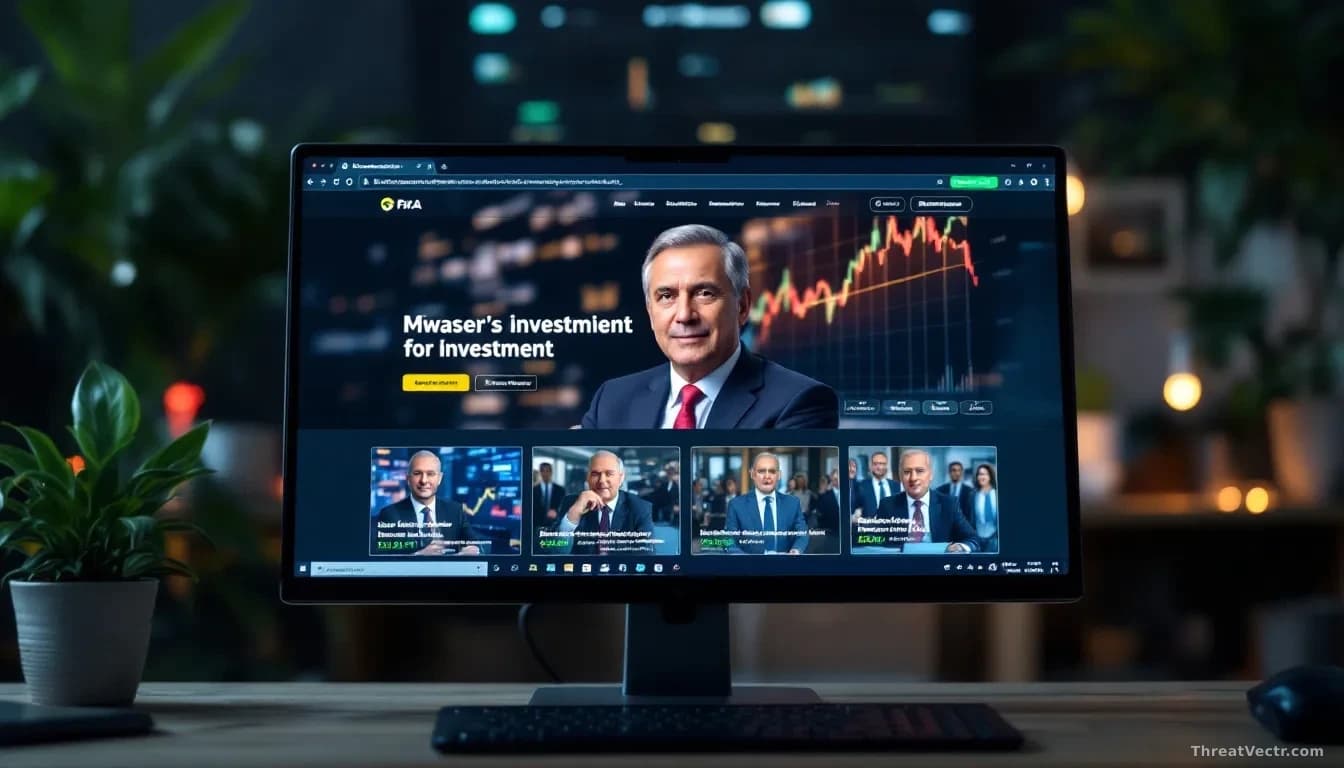
Criminals build a fake world around a fake product. It starts with a deepfake, an AI-generated photo or video that puts a real person's face and voice onto footage they never filmed, usually someone Australians trust: a politician or a well-known financial presenter.
That deepfake anchors a wider web. Scammers fabricate news articles stuffed with fake quotes, invent glowing reviews, build convincing websites, and buy paid advertisements on mainstream platforms. A person clicking what looks like a normal ad ends up on a fake news page, reads an endorsement from a recognisable face, and hands over their contact details.
What follows is scripted. Criminals call the potential victim, offer small payments to build trust, and push them toward fake investment platforms designed to collect deposits that won't be returned.
Who is being impersonated?
Prime Minister Anthony Albanese tops ASIC's list of most-impersonated Australians. He's joined by Opposition Leader Angus Taylor, One Nation senator Pauline Hanson, independent senator Jacqui Lambie, and mining billionaire Gina Rinehart, whose company Hancock Prospecting has issued repeated public warnings that endorsements attributed to her are fabricated.
ABC finance presenter Alan Kohler appears frequently. Financial commentators Tom Piotrowski, Alan Oster and Stephen Koukoulas are also on the list, as is businessman Dick Smith. Late radio broadcaster John Laws, who died late last year, features too.
Should ordinary people be worried, and what can they do?
Yes, though the risk is manageable with specific checks. ASIC chair Sarah Court is direct: polished content and convincing testimonials prove nothing about whether an investment is real.
Her practical advice: find the Australian Financial Services licence number any legitimate investment business is required to hold, then verify it against ASIC's free public register. If the number's missing, or the details don't match, don't invest.
Kohler argues that asking consumers to be careful isn't enough. "There should be heavy fines for the platforms that carry this stuff and the AI models that make it," he told the Sydney Morning Herald.
| Metric | Figure | Period |
|---|---|---|
| Total scam sites removed | 19,400 | Past year |
| Increase in total takedowns | 182% | Year on year |
| Phishing sites removed | 5,476 | Past year |
| Increase in phishing takedowns | 279% | Year on year |
| Fake investment platforms removed | 7,051 | Past year |
| Increase in fake investment platform takedowns | 151% | Year on year |
If you've already sent money to a platform you now suspect is fraudulent, contact your bank immediately and report the incident to ASIC's Scamwatch and the Australian Cyber Security Centre.
The broader pattern here is worth watching: the scam infrastructure, fake news pages, scripted call centres, bought ads, is industrialised. ASIC's takedown numbers are growing fast, but so is the machinery producing new sites. The regulator can't outpace it alone.