DevMan Ransomware Runs a One-Stop Web Portal for Its Criminal Affiliates
Swiss researchers say the operation, tracked as Funky Mantis, gives partners a single dashboard to build malware, chase payments, and manage victims.
Key points
- Swiss cybersecurity firm PRODAFT is tracking the DevMan ransomware operation under the name Funky Mantis.
- The gang runs a single web portal where affiliates build payloads, monitor earnings, and manage victims.
- Ransomware-as-a-service means the core group rents its tools to other criminals in exchange for a cut.
- Centralised portals like this one lower the skill bar for would-be attackers.
- A shared toolkit doesn't mean shared operators, which complicates attribution.
The people behind the DevMan ransomware scheme have built themselves an office in a browser tab.
Ransomware, for readers new to the term, is malicious software that scrambles a company's files and demands payment for their return. DevMan sells that capability to other criminals. Researchers call this model ransomware-as-a-service, or RaaS: the core group writes the code, affiliates do the breaking-in, and both split the profits.
Swiss cybersecurity company PRODAFT, which studies criminal networks, is tracking the DevMan operation under the name Funky Mantis. Different vendors give the same gangs different names, so expect other labels to appear over time. For now, treat the Funky Mantis tag as PRODAFT's, with medium confidence that it maps cleanly to the DevMan brand seen on leak sites.
What is the DevMan portal, in plain terms?
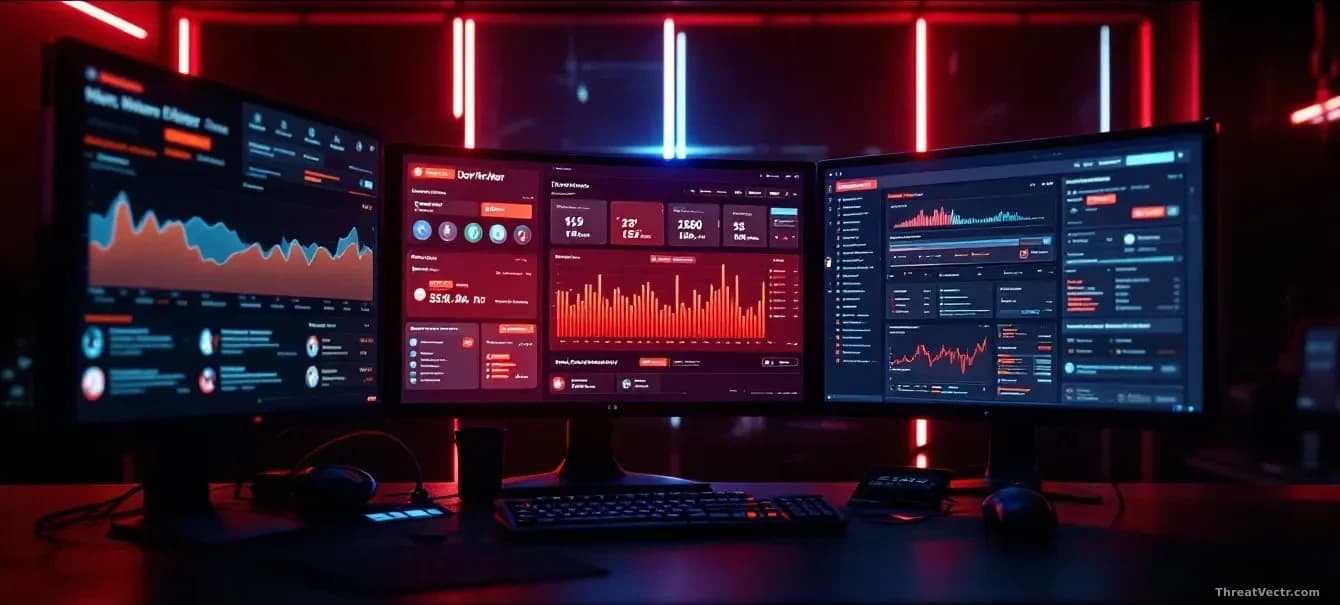
It's a website only affiliates can log into, packaging every job a ransomware operator needs into one place. Think of it as the criminal version of a software-as-a-service dashboard.
According to PRODAFT, first reported by The Hacker News, the portal handles three jobs: generating fresh malware samples for each attack, tracking who has paid, and managing the victim list. That combination is what makes it notable.
Most ransomware crews still stitch these tasks together with chat groups and separate builder tools. A single web app is cleaner and faster for a newcomer to pick up.
Why does a slick portal matter?
It lowers the skill bar. A criminal who couldn't previously assemble their own toolkit can now click through a browser interface and walk out with a ready-to-deploy payload.
That pattern isn't new. Groups like LockBit and the now-defunct Conti pushed the same model years ago, and their affiliate panels are part of why ransomware became an industry rather than a hobby. We covered how INC Ransomware absorbed the affiliate exodus from LockBit on 18 June 2026. Funky Mantis appears to be iterating on that template rather than inventing it.
| Detail | What PRODAFT reports |
|---|---|
| Operation name (PRODAFT) | Funky Mantis |
| Public brand | DevMan |
| Model | Ransomware-as-a-service |
| Portal functions | Payload builds, finance tracking, victim management |
Should ordinary people be worried?
Not directly, but indirectly, yes. You won't log into the DevMan portal. Your dentist's office, your kid's school district, or your local council might end up on the other side of it.
If a service you use is hit, watch for two things: a notice from the organisation telling you what data was exposed, and a spike in phishing attempts where criminals impersonate that organisation to harvest passwords or card details. Treat unexpected messages with suspicion for a few months after any breach notice.
What can defenders take from this?
Capability isn't the same as intent, and a shared toolkit doesn't mean shared operators. When incident responders see DevMan malware on a network, the person who deployed it could be any one of the affiliates renting the platform. That matters for attribution: overlapping infrastructure and overlapping TTPs (the tactics and procedures attackers reuse) don't automatically point at one crew.
For now, PRODAFT's tracking gives defenders a name to hang indicators on. That alone is useful.