Aurora ransomware crew caught using Cursor AI to break into networks
Researchers at CloudSEK and Gambit Security independently tie a Russian-speaking gang to at least 10 intrusions built with help from an AI coding assistant backed by SpaceX.
Key points
- Researchers link the Aurora ransomware group, also tracked as Aur0ra, to intrusions at around 10 organisations.
- The gang used Cursor, an AI coding assistant made by Anysphere, a startup backed by SpaceX, to help write its attack tools.
- CloudSEK and Gambit Security reached the same conclusion independently after finding exposed servers the criminals had left open.
- The operators appear to be Russian-speaking, based on language artefacts found on their infrastructure.
- No public link to a wider named cluster exists yet, so treat single-source attribution claims with caution.
A Russian-speaking ransomware crew has been caught using a mainstream AI coding assistant to help build the tools it uses to break into company networks.
The group operates a strain of ransomware, malicious software that locks a company's files until a ransom is paid, tracked as Aurora and also written Aur0ra. CloudSEK and Gambit Security say they arrived at the same finding independently after discovering servers the gang had left exposed on the internet. The Hacker News first surfaced the joint reporting.
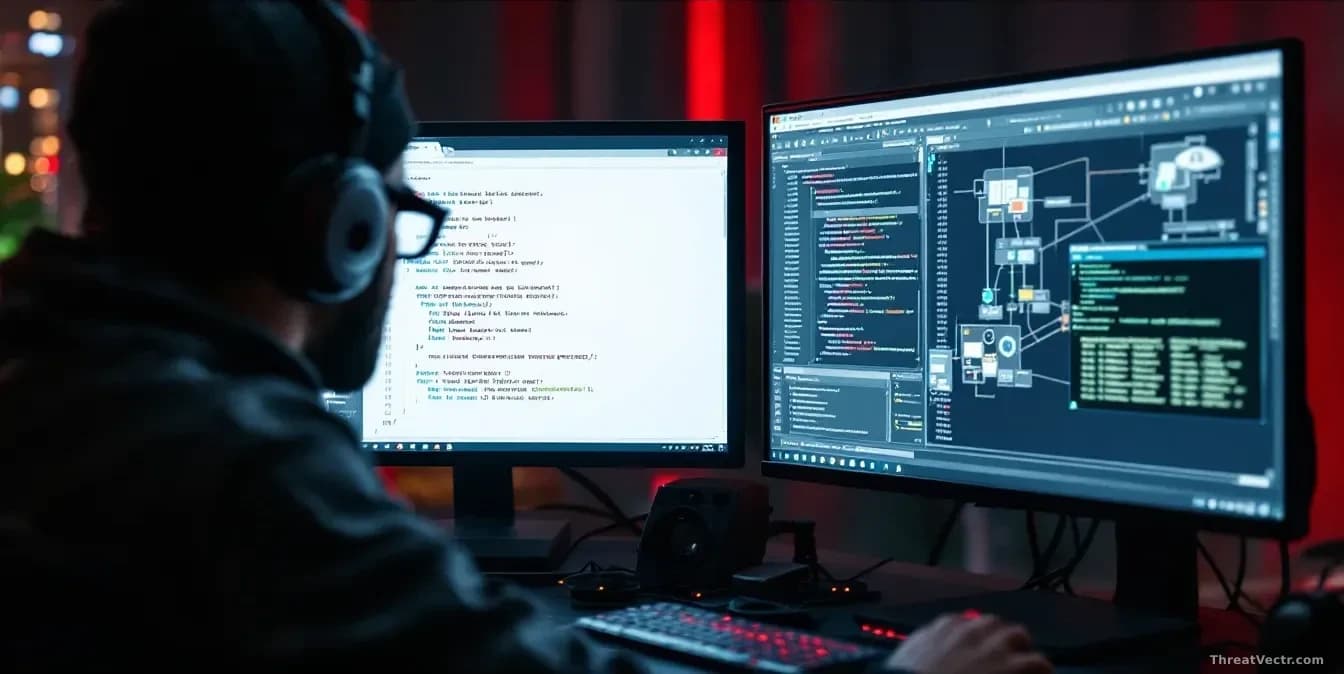
What makes this case worth watching is the tool the criminals chose. They used Cursor, an AI-powered coding assistant built by Anysphere, a startup that counts SpaceX among its backers. Cursor is marketed to software developers as a faster way to write code. Aurora's operators appear to have used it exactly like that, only for malware. Our 17 August roundup flagged a Cursor-related security issue weeks before this case surfaced, and the pattern it described is becoming harder to dismiss.
Who are the Aurora hackers?
Aurora isn't one of the household names. It's a small operation, sitting well below LockBit or BlackCat in profile. Researchers describe the operators as Russian-speaking, a conclusion drawn from language fragments and tooling recovered from the exposed servers. That's a common indicator but a soft one. Attribution sits at medium confidence at best, and no public link has been drawn to a larger tracked cluster.
The two firms identified roughly 10 victim organisations tied to the group's infrastructure. Names haven't been published.
How were they using Cursor?
The gang used Cursor as a coding aid while building and refining the software it deploys inside victim networks. Instead of writing every line of attack code from scratch, the operators asked the AI to draft pieces of it, then shaped the output. It's the same shortcut a legitimate developer would take, applied to criminal work.
This isn't the AI launching attacks on its own. It's people using a commercial product to move faster. That distinction matters for how defenders and vendors should respond.
| Detail | What researchers found |
|---|---|
| Group | Aurora / Aur0ra ransomware |
| Language | Russian-speaking operators |
| Estimated victims | Around 10 organisations |
| AI tool abused | Cursor (Anysphere) |
| Reporting firms | CloudSEK, Gambit Security |
Should ordinary people be worried?
Not directly, not today. Aurora is a niche operation and its 10 known victims are companies, not consumers. The broader concern is what the case signals: criminal groups are folding mainstream AI coding tools into their workflow, lowering the skill threshold for building working malware. CloudSEK also brought us the poisoned LiteLLM story in August, and the throughline is the same: attackers treating the AI tooling ecosystem as attack surface.
For staff at any organisation the practical advice is unchanged. Treat unexpected email attachments and unfamiliar login prompts with suspicion, and flag anything odd to your IT team fast. Ransomware crews almost always get their first foothold through a clicked attachment or a reused password.
What happens next
Anysphere and other AI coding vendors will face harder questions about misuse, and more reports like this one will follow. Distinguishing capability from intent will matter as the story develops. For now, treat Aurora as a small but real operator that's found a productivity boost, and wait for a third source before assuming the scale runs beyond 10.