Australia's First Live Face-Scanning Police Trial Has Already Checked 130,000 People. Experts Are Alarmed.
Western Australia Police ran facial recognition cameras across Perth and Fremantle for weeks before its own privacy watchdog got a proper look. Researchers warn the system may be least accurate for the very communities it is most likely to scan.
Key points
- Western Australia Police scanned more than 130,000 faces in Perth and Fremantle during the first week of the trial, which began in June 2025.
- The system compared faces against a watchlist of roughly 4,000 people and triggered 33 alerts, leading to 18 arrests in that opening week.
- One false match was recorded in the first week, meaning the system wrongly flagged an innocent person as a suspect.
- WA's Office of the Information Commissioner said it was not invited to any meaningful consultation before the trial launched.
- Researchers warn the underlying algorithm may perform worse on First Nations faces, a concern police have not publicly addressed.
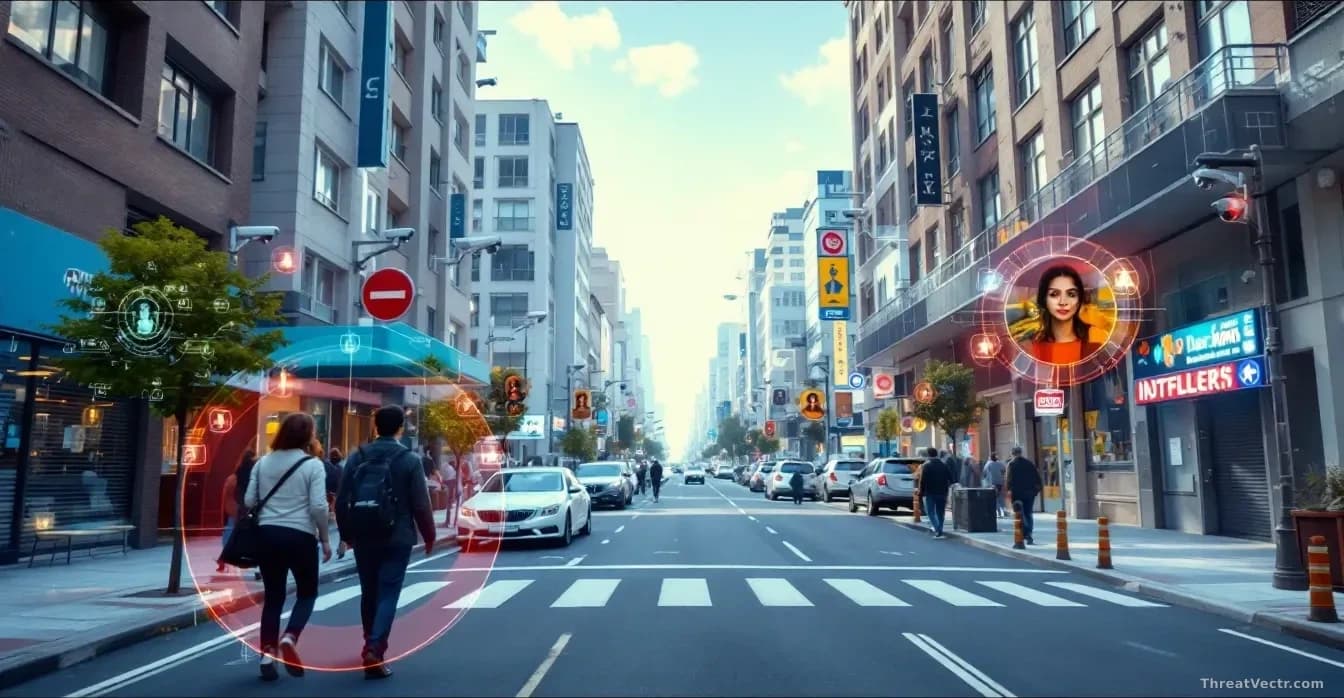
Western Australia Police is running the country's first live facial recognition trial on public streets, drawing sharp criticism from privacy researchers, Aboriginal legal advocates, and the state's own independent watchdog. We first reported on WA Police's use of this technology on 22 July, when a camera on a police van scanned hundreds of faces a minute at a Perth transit hub. The scale has since grown considerably.
The trial uses NEC Corporation's Neoface m40 system, a one-to-many facial recognition tool. That means cameras scan every face that passes in front of them, then instantly compare each face to a database of people police want to find, rather than confirming whether one specific person is who they claim to be. Officers monitor results from a nearby van.
In the first week alone, more than 130,000 people were scanned across Perth and Fremantle without being stopped or asked.
What did the trial actually find?
The system generated 33 alerts and led to 18 arrests in its first week. One person was falsely identified as being on the watchlist. Police described that rate as better than a comparable 2023 trial in the United Kingdom using the same NEC algorithm.
The watchlist holds roughly 4,000 people: those accused of serious offences, missing persons, and individuals considered a risk to themselves or others. WA Police have released no further data since that first week, saying more statistics will come "in a co-ordinated matter."
Could the technology get the wrong person?
Yes, and researchers say certain groups face a higher risk of being wrongly flagged. Melbourne Law School associate professor Jake Goldenfein said the algorithms are typically trained on datasets skewed toward white male faces. That imbalance means the software tends to be less accurate when scanning women, people of colour, particularly women of colour.
The UK National Physical Laboratory study that WA Police cited when choosing the NEC product found no statistically significant accuracy gap by gender or ethnicity, but only under controlled conditions. Accuracy fell once real-world factors arrived: poor lighting, changes in skin tone, awkward camera angles. Michael Birtwisle, who holds a senior data and AI policy role at the Ada Lovelace Institute in London and gave evidence to a 2023 UK parliamentary inquiry on police facial recognition, told the ABC that Australian police can't simply borrow British trial data, particularly because NEC's system hasn't been publicly confirmed as tested on First Nations faces. WA Police didn't answer a direct question on that point.
Were Aboriginal communities consulted?
Not meaningfully, according to the Aboriginal Legal Service of Western Australia. Its legal services director, Peter Collins, learned about the trial through a brief email from a police superintendent requesting a 20-minute meeting two days before launch.
"This was a done deal from the get go," Collins said.
Collins argues the trial locations were chosen in areas where Aboriginal residents and visitors are concentrated. WA Police deny this, saying sites are selected on policing need alone. The force's own privacy impact assessment stated the trial would not "primarily or especially affect Aboriginal people," a conclusion Collins called a "tick a box exercise."
The state's privacy regulator, the Office of the Information Commissioner, warned publicly in July that running a program of this scale without proper guardrails carries serious risks, and confirmed it wasn't included in any meaningful consultation before the trial began.
| Detail | Figure |
|---|---|
| Trial start date | June 2025 |
| Faces scanned (week one) | 130,000+ |
| Watchlist size | ~4,000 people |
| Alerts triggered (week one) | 33 |
| Arrests made (week one) | 18 |
| False positives (week one) | 1 |
If you walked through central Perth or Fremantle since June, your face was almost certainly scanned. Police say images of people not on the watchlist are deleted almost immediately and appear pixelated even to monitoring officers. Whether that deletion actually happens, and how fast, is hard to verify given the limited data released so far.
Privacy expert John Pane of Electronic Frontiers Australia said the deeper problem isn't just the lack of consultation. It's the law itself. The current framework hands police sweeping powers with little independent oversight, and he believes the state's privacy legislation needs urgent amendment to keep pace with what this technology can now do.
The pattern here is worth watching. NSW is moving separately toward a national face-matching database, as we reported on 9 August. WA is running live trials with real-time arrests and no public accuracy data beyond week one. Both are outpacing the legal frameworks meant to govern them.
Common questions
What is one-to-many facial recognition?
It's a system that scans every face in a crowd and checks each one against a database of known persons, rather than simply verifying a single person's identity. It's the more powerful and more privacy-sensitive of the two main facial recognition approaches.
What happens if you're wrongly flagged?
Police say officers review every alert before acting. The one false match in week one didn't result in an arrest, but the process for challenging a wrongful identification isn't publicly documented.