130,000 AI Cameras Are Reading Your Licence Plate Right Now
A private company called Flock Safety has blanketed the United States with AI-powered licence-plate readers, mostly for police use. Critics say the network has grown faster than the laws meant to govern it.
Key points
- Flock Safety has deployed approximately 130,000 AI licence-plate reader cameras across the United States.
- The cameras are used primarily by law enforcement agencies to track vehicles in real time.
- Rapid expansion has triggered privacy protests and calls for tighter legal oversight.
- No federal law currently governs how long Flock or its police clients can store the data collected.
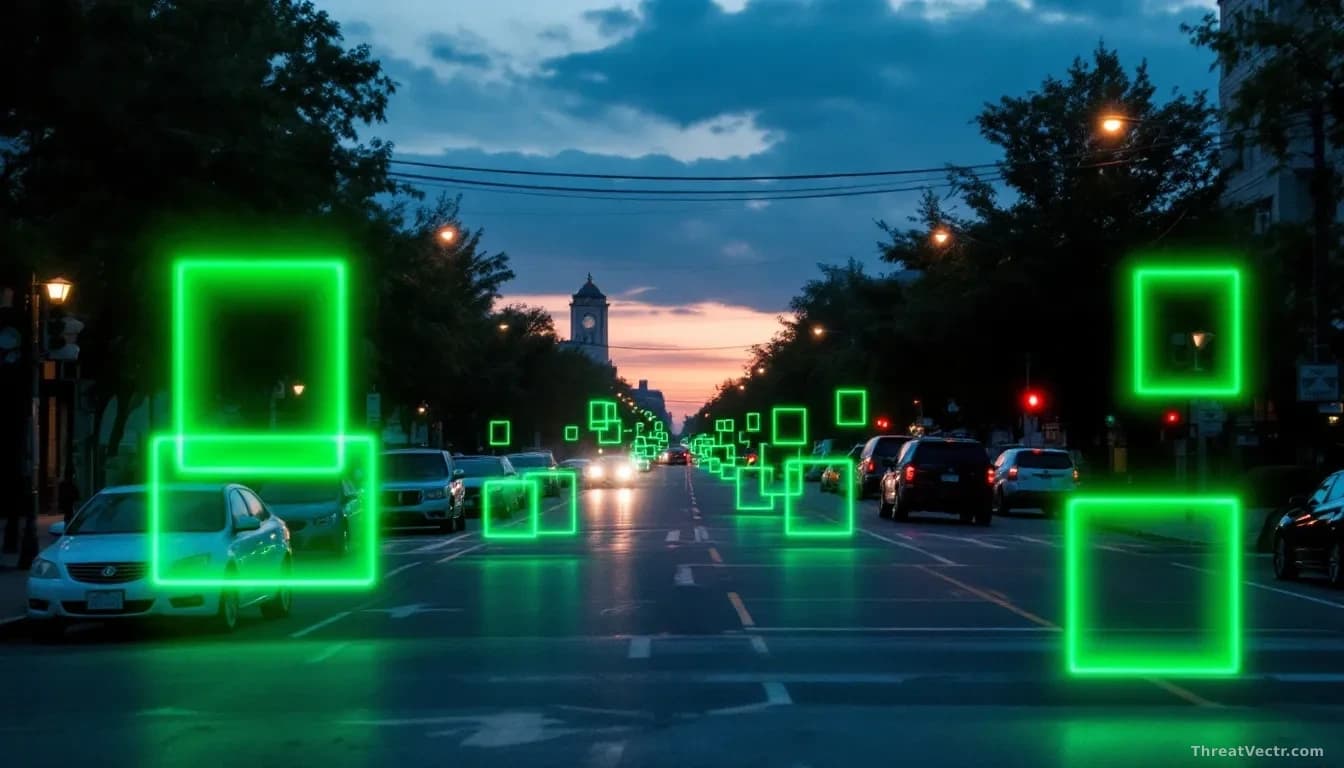
Every time you drive past one of Flock Safety's small, pole-mounted cameras, it photographs your licence plate, runs the image through an AI system (software that recognises patterns the way a human eye does), and logs where your car was and when. Do that across enough American towns and you've got something close to a continuous map of where millions of people go every day.
There are now around 130,000 of these cameras operating across the country, most under contracts with local police departments. BBC News reported the scale of the rollout this year.
How does the system actually work?
Flock's cameras do more than read number plates. Each unit notes a vehicle's make, colour and any visible features such as roof racks or bumper stickers, building what the company calls a "vehicle fingerprint." Police can search the database by plate, colour or partial description and get a list of sightings within seconds.
The pitch to police is straightforward: find stolen cars faster, solve crimes with less legwork. A camera outside a petrol station has no officer costs, no sick days.
Should ordinary drivers be worried?
Possibly, yes. The concern isn't really about catching car thieves. It's about what happens to the data once it exists.
Privacy advocates point out that Flock's network can, in practice, reconstruct a person's daily routine from nothing more than their number plate. Drive to a hospital, a lawyer's office or a political rally and that trip may sit in a database for months. Most states have no specific law capping how long records are kept or who can request them.
We reported on 17 August 2026 that Flock's CEO apologised after officers misused the system, including one Massachusetts officer accused of using camera data to track an ex-girlfriend. That case is the clearest illustration yet of what absent oversight actually costs real people.
Protests have broken out in several cities where residents discovered cameras were installed without public consultation. Some local councils have since voted to remove them, though our 23 August story found that cities which ditched Flock often stayed under surveillance anyway, their governments having simply switched to a different vendor.
| Fact | Detail |
|---|---|
| Cameras deployed | ~130,000 |
| Primary clients | US law enforcement agencies |
| Data captured | Plate, make, colour, distinguishing features, time, location |
| Federal data-retention law | None currently in place |
| State-level rules | Vary widely; most states have no specific cap |
Flock Safety argues its system is used within legal boundaries and helps solve serious crimes. The company also says individual agencies set their own data-retention periods. That last point is part of the problem: one town might delete records after 30 days, while a neighbouring county keeps them indefinitely.
What can residents do?
Check whether your city or county has a Flock contract. Many local governments post procurement records online. Attending a public council meeting and asking about data-retention policy is a direct route to an answer. State legislators have moved when constituents pushed: several states have tightened rules after organised pressure from residents.
The cameras aren't going away. Whether the rules governing them catch up before the network grows much larger is the fight happening right now, statehouse by statehouse.
Common questions
Can I find out if I have been tracked by one of these cameras?
In most US states, you can file a public-records request (a formal written demand under freedom-of-information law) with your local police department. Whether they must release the data varies by state.
Are these cameras legal?
Yes, in most jurisdictions. Filming public roads is generally lawful. Legal disputes centre on data storage, who can access the records, and whether residents must be notified before cameras go up.