Train companies target 'donutters' and last-minute digital ticket fraud
A double-tap on a smartphone is costing UK rail operators millions. Here's how the schemes work and what operators plan to do about it.
Key points
- Fare dodgers called 'donutters' buy the cheapest valid digital ticket seconds before passing through the ticket gates, regardless of how far they actually travelled.
- South Western Railway and Govia Thameslink Railway (GTR) have both announced crackdowns on digital ticketing fraud.
- The shift away from paper tickets has opened loopholes that criminals exploit with nothing more than a smartphone.
- The UK government, which plans to bring most of England's rail services back into public ownership, is backing the enforcement push.
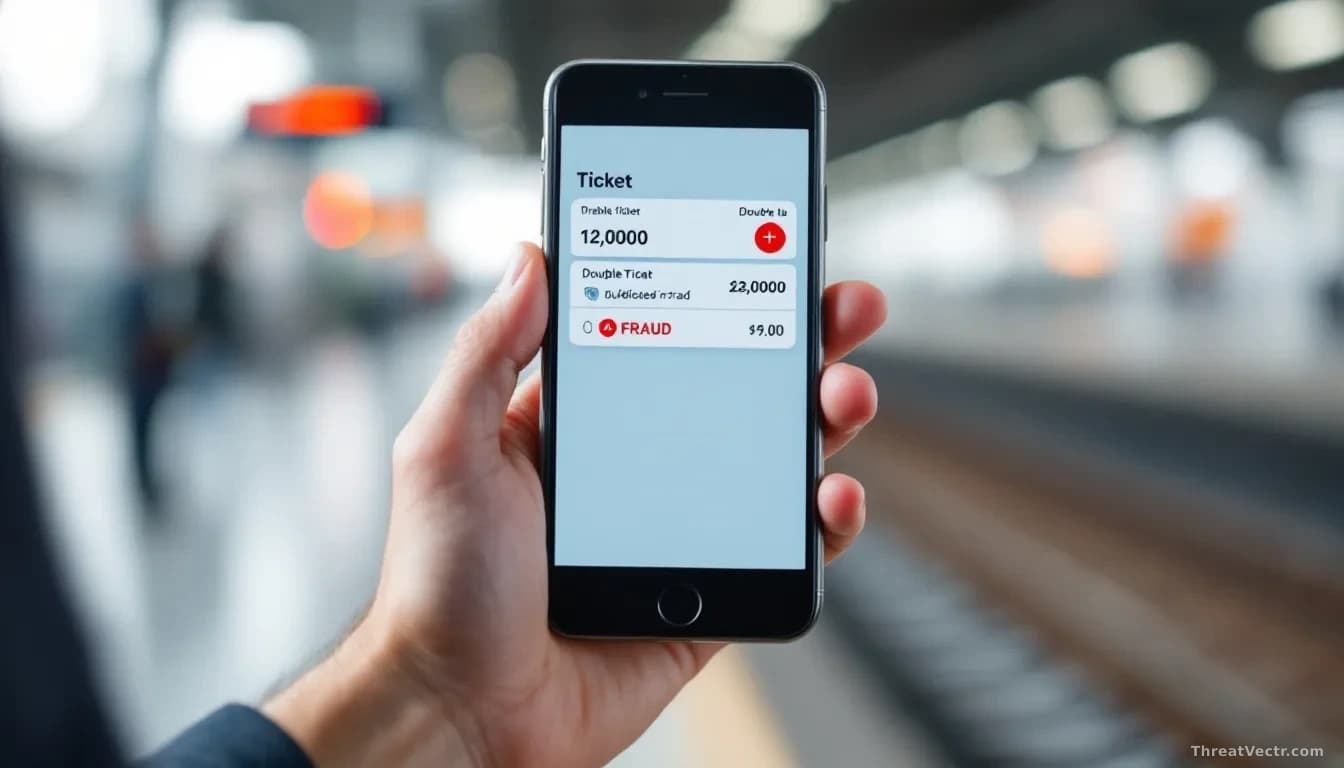
There's a name for it now. A 'donutter' boards a train at one end of a long route, rides the whole way, then buys the cheapest digital ticket covering only the final stop or two just before the train pulls in. One tap on a phone app, a valid barcode on screen, and they walk through the gates clean.
Brazen, and trivially easy.
How does this kind of fraud actually work?
Digital rail tickets can be bought in seconds from an app. That convenience is the loophole. A passenger can delay purchasing until the last moment, paying pennies for a short hop rather than the full-price fare for a journey that might cost ten times as much.
Donutting is one variant. Others involve sharing screenshots of used tickets, exploiting gaps in how conductors scan barcodes, or buying refundable tickets and then claiming the refund after travelling. Digital systems designed to make honest travel smoother have given dishonest travellers new room to manoeuvre.
South Western Railway and Govia Thameslink Railway, which together cover a large stretch of southern England, are working with the Department for Transport on technical fixes and stronger enforcement to close these gaps. Threat Vectr first covered rail fraud as a digital-ticketing threat on 11 August 2026.
Should ordinary passengers be worried?
No. Buy the right ticket and nothing here touches you. Honest travellers won't notice most of what operators are planning.
If you've ever accidentally bought the wrong ticket and sorted it informally with a conductor, though, stricter automated checking may make those conversations harder. Keep your receipts and booking confirmations.
What happens next?
The Guardian reported on the crackdown as the UK government prepares to renationalise most of England's rail network, handing a single public body control over both trains and ticketing rules. That's an opportunity to redesign the system from the ground up rather than patch it case by case.
Operators are currently leaning on gate technology that checks purchase timestamps, mid-journey staff checks, and data analysis to flag accounts showing suspicious last-minute buying patterns.
No technical fix is complete on its own. Fraud follows opportunity, and as long as digital tickets can be bought after boarding, some version of this problem persists. The real test is whether enforcement keeps the scale small enough that it stops eating into the finances of a network that already struggles to balance its books. Renationalisation makes that question a political one as much as an operational one, and that's where the pressure will land next.