Thirty US States Take Meta to Trial Over Child Safety, Seeking Up to $1 Trillion
A federal jury trial launched this week could force Facebook and Instagram to strip out some of their most addictive features, and cost Meta more money than most countries earn in a year.
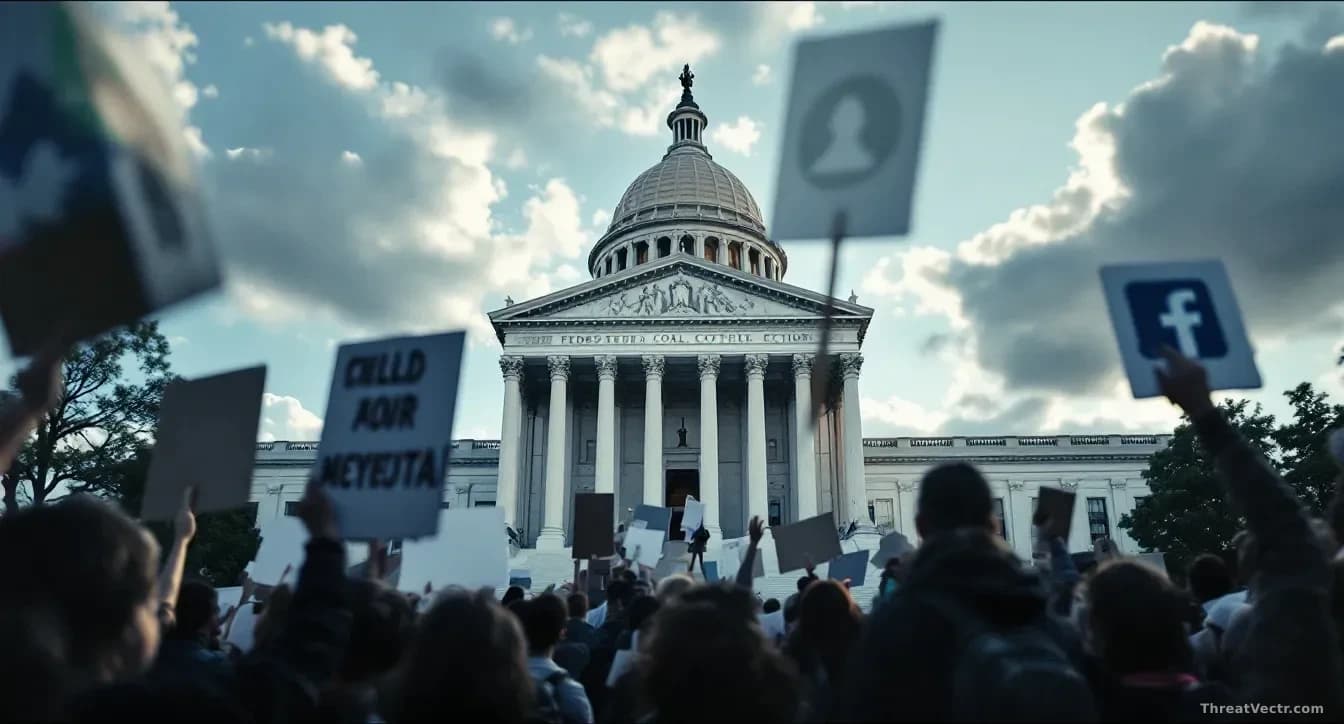
Key points
- Thirty US states filed a lawsuit in 2023 claiming Meta broke federal and state laws designed to protect children's privacy online.
- The states are seeking damages of up to $1 trillion, described by one attorney general as "the largest consumer protection lawsuit in American history".
- A New Mexico judge fined Meta $942 million earlier this year and declared it a public nuisance.
- The states want Instagram and Facebook to remove like counts, autoplay video, infinite scroll and disappearing posts for users under 18.
- Meta denies the allegations and says the evidence will show its commitment to young users.
A jury trial that opened this week in a California federal court puts Meta, the company that owns Facebook and Instagram, in the dock over claims that it knowingly built features designed to hook children on its platforms and concealed what its own research showed about the harm those features caused.
The case was brought by attorneys general (the top law-enforcement officers) from 30 US states, including California and New York, representing close to two-thirds of the American population.
Who is suing, and what exactly do they want?
The coalition wants money and structural change. On the money side, they are seeking up to $1 trillion. On the structural side, they want features they say are engineered to keep young people glued to their screens removed entirely.
Specific demands include ending the display of "like" counts, the running tally of approvals on every post; removing infinite scroll, where content loads automatically so users never reach a natural stopping point; banning autoplay video; requiring parental verification before a child can sign up; prohibiting accounts from sending or receiving explicit images; and ending disappearing posts such as Instagram Stories.
Kentucky Attorney General Russell Coleman drew a direct comparison to past mass litigation. "We did it with the Tobacco Settlement in the 1990s," he said. "We'll do it again with Meta."
The states also want Meta to change what they call its "dopamine-manipulating recommendation algorithms" and remove many appearance-altering image filters, two demands that go beyond anything the New Mexico ruling addressed.
How bad could this get for Meta?
Potentially existential. Meta is currently worth around $1.5 trillion on the stock market, so a $1 trillion penalty would consume the large majority of that value.
Judge Yvonne Gonzalez Rogers, a chief federal judge in California who built a reputation over nearly 20 years for being incisive and direct, is presiding. She also handled the Elon Musk v Sam Altman dispute.
A New Mexico ruling from earlier this year shows what defeat looks like in practice. Judge Bryan Biedscheid fined Meta $942 million, ordered it to remove like counts for under-18 users in that state, banned teenagers from sending or receiving nudity through the platforms, and declared the company a "public nuisance" comparable to a factory polluting the air. Meta said it would appeal. That ruling applied only to New Mexico; a loss in this federal case would almost certainly require changes across the whole US.
| Proceeding | Outcome | Damages / Demands |
|---|---|---|
| New Mexico ruling (2025) | Meta lost; appealing | $942 million fine |
| 30-state federal trial (ongoing) | Jury deliberating | Up to $1 trillion sought |
| Earlier individual lawsuits | Mixed results | Varies by case |
What does Meta say?
The company denies all of it. "We strongly disagree with these allegations and are confident the evidence will show our longstanding commitment to supporting young people," a Meta spokeswoman said. Meta has handed over more than two million internal documents as part of the case.
The states argue those documents work against Meta. Lawyers point to internal research linking Instagram's like-count feature to "social comparison", meaning the habit of measuring your own worth against other people's photos. That comparison was tied to "increased loneliness, worse body image and negative mood", according to the company's own findings, as reported by BBC News.
When we covered the US House passing the KIDS Act on 30 July, the same parental-control and age-verification demands now before this jury were already at the centre of the congressional debate. The two tracks, legislative and judicial, are now running in parallel.
What should parents and young people do right now?
The trial will take time regardless of outcome. Parents can act now without waiting. Setting screen-time limits through a phone's built-in controls costs nothing, and most phones let parents block notifications from specific apps during school hours and at night. Talking openly with children about how like counts work, and why they are designed to feel meaningful, is equally practical and free.
The numbers here are staggering enough that they risk obscuring the real question: whether courts can compel a redesign of products used by hundreds of millions of people, or whether this ends, like so many big tech cases, in a fine that gets absorbed and forgotten.