The Man Who Meets You at Your Worst: Inside Melbourne Airport's Only Chaplain
Martyn Scrimshaw has spent nine years walking the terminals of Melbourne Airport, helping the homeless, the scammed, the grieving, and the fleeing. Now a film starring Hugo Weaving is bringing his work to a wider audience.
Key points
- Martyn Scrimshaw has worked as chaplain at Melbourne Airport for nine years, serving roughly 10,000 daily passengers and 23,000 staff.
- Romance scam victims regularly arrive at Melbourne Airport's arrivals gate waiting for people who never come, having already sent money overseas.
- A new film and television series, "The Airport Chaplain," starring Hugo Weaving, premieres at the Melbourne International Film Festival in August 2026 before airing on SBS.
- Domestic violence survivors, homeless residents, and people in mental health crisis all receive support through Scrimshaw's chaplaincy.
Martyn Scrimshaw wears a high-visibility vest every day at work. On the back, one word: "Chaplain."
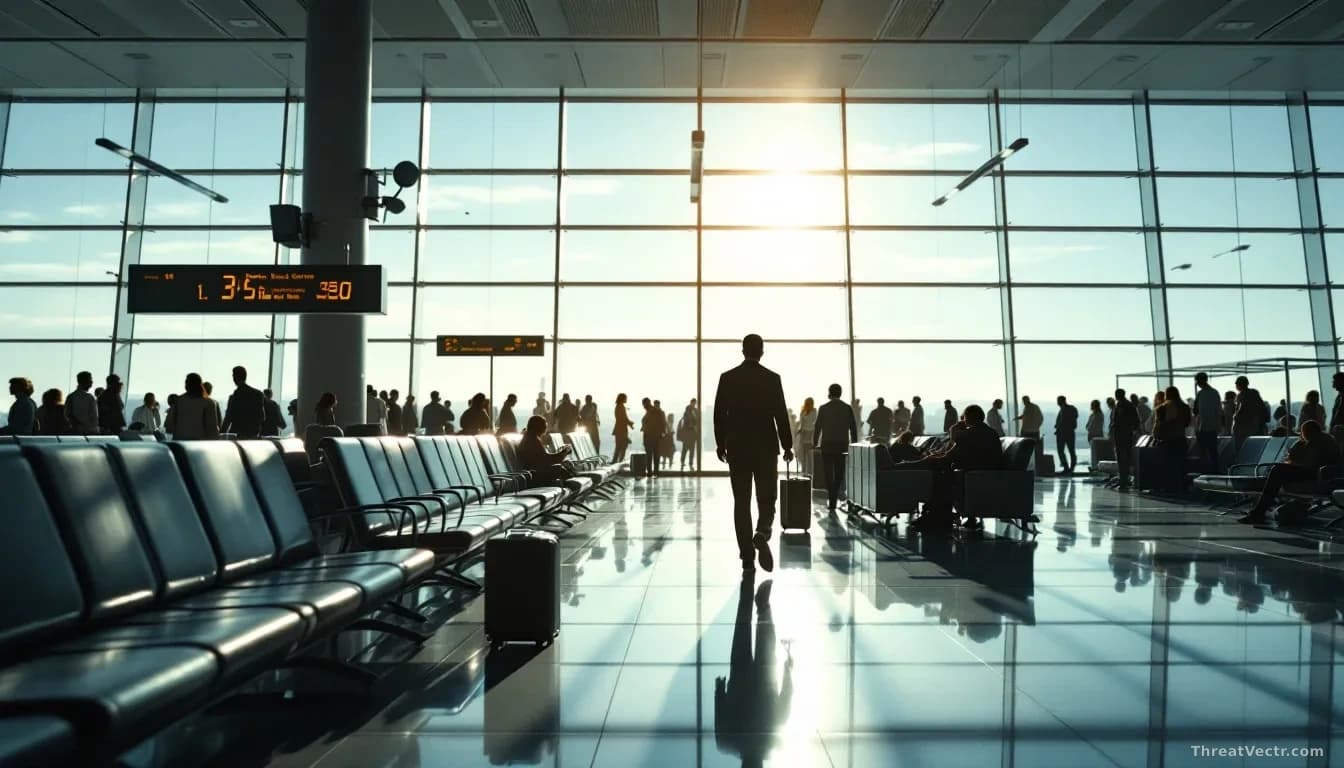
He's not there to preach. He's there because airports, for all their mundane routine, are places where life compresses into a few unbearable hours. Deaths on planes. Homeless men sheltering from the cold. Women fleeing abusers. Elderly people standing alone at arrivals gates, waiting for someone who was never going to come.
"My parish is this airport," Scrimshaw told The Age.
What does an airport chaplain actually do?
A chaplain is a pastoral worker attached to a non-church setting, a hospital, a prison, an airport. The role is broader than prayer. Scrimshaw spends his days meeting people at the sharpest edges of their lives.
When a passenger dies on a flight, which happens every few weeks, Scrimshaw is called in to support crew and family waiting at the terminal. Most deaths involve cardiac arrest. The best outcome, as he describes it, is paramedics restoring a heartbeat before the ambulance arrives.
He also checks on people sleeping rough inside the terminal. One man in his 80s was a regular. When his health declined, Scrimshaw walked him to the airport pharmacist, arranged a taxi to hospital, and contacted social workers to find him supported housing. A month before speaking to The Age, a welfare agency called asking if Scrimshaw had seen him. He hadn't.
"I'm hoping the worst hasn't happened," he said.
A Nepalese woman lived at the terminal for more than three months, camping under an escalator, befriending staff who fed her. Things came to a head when she brought in a rice cooker and started cooking her own meals. Scrimshaw eventually worked with her family over months to get her home.
What are the romance scam cases?
Romance scams are a growing problem at the airport. In a romance scam, criminals build fake online relationships with victims, then convince them to send money for a flight or an emergency. Nobody ever arrives.
Scrimshaw sees people, often older, standing at arrivals waiting. Nobody walks through. He has to explain, gently, that the money is gone and the person never existed. The cases we've been tracking since our Interpol Operation First Light report on 9 July, which identified more than 142,000 romance and investment scam victims between January and April 2026, have a physical endpoint that rarely gets reported: someone waiting at a gate.
One case went further. A man arrived believing his online contact was being held by Australian Border Force, the government agency that manages customs and immigration, and that he needed to pay a fee to release them. "You have to tell them that's not how it works in Australia," Scrimshaw said.
If you or someone you know has sent money to a person they've never met in person, contact Scamwatch, run by the Australian Competition and Consumer Commission, before sending anything further.
The domestic violence cases
Scrimshaw regularly works with domestic violence agencies to help women and children relocating interstate to escape abusers. He finds them safe places to wait and stays until they board.
One case stays with him. A woman fleeing a man in Melbourne's west boarded a SkyBus, a public coach service running between the city and the airport. The driver noticed a man chasing her and shut the doors. Scrimshaw met her at the terminal, helped her file a police report, and saw her onto a flight to Tasmania.
The next morning a woman arrived with an 11-year-old daughter and a baby, trying to reach Scotland. Police had detained the previous day's man overnight for breaching an AVO, an Apprehended Violence Order, a court order banning contact with a person. That man, it turned out, was this woman's abuser. Scrimshaw helped book flights using payment methods that couldn't be traced back to her location.
"The stuff she told me, no 11-year-old should see that," he said.
The film, and why there are so few chaplains left
Australia once had more airport chaplains. Scrimshaw is one of two chaplains left in the country.
The film came from an unlikely encounter. A producer lost her handbag in an Uber and Scrimshaw helped her track it down. She was struck by his work and turned it into a drama. "The Airport Chaplain" stars Hugo Weaving and premieres at the Melbourne International Film Festival, which runs 6 to 23 August 2026, before airing on SBS.
The job, as Scrimshaw would be the first to tell you, is rarely dull. What it actually costs the people who do it is a different question.