New Zealand's Spy Agency Says It Blocked a Chinese Observatory From Installing Satellite-Tracking Equipment on NZ Soil
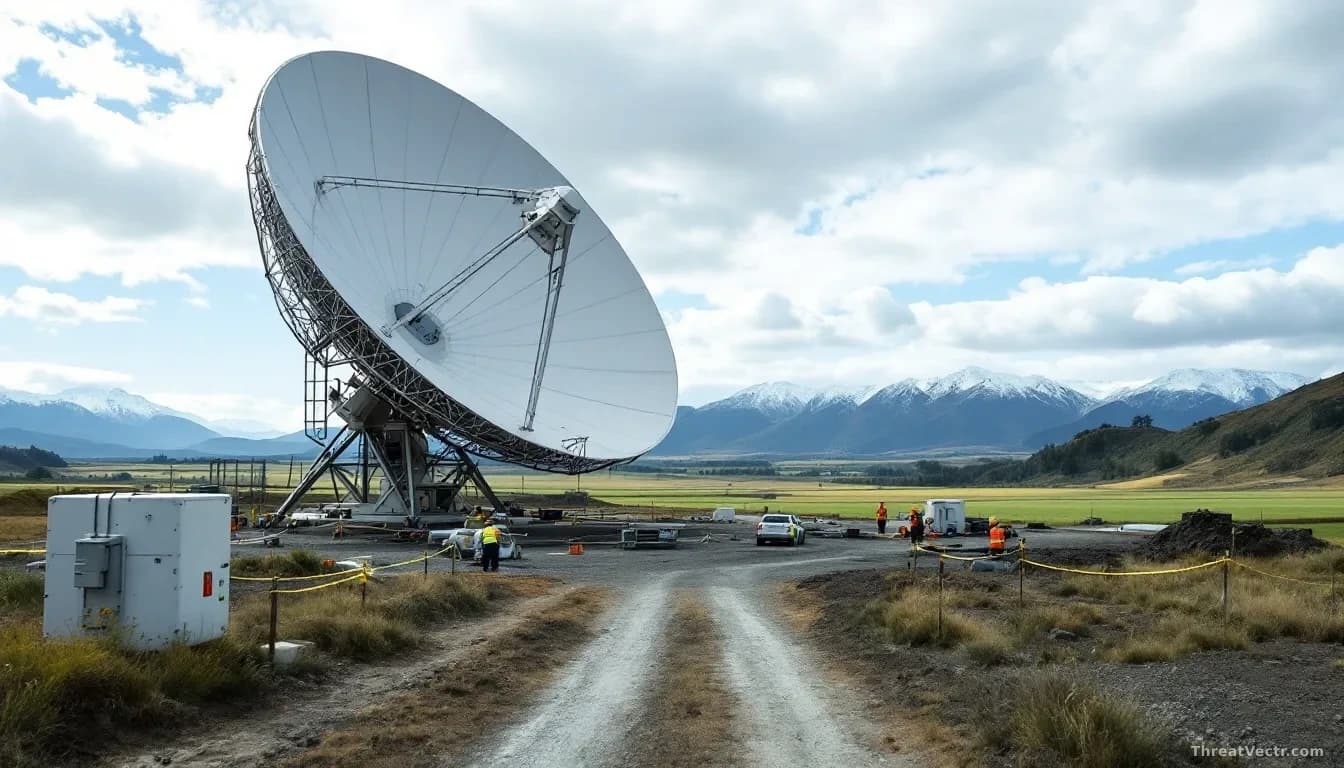
Purple Mountain Observatory, a Chinese government-linked research body, tried to set up ground-based space hardware in New Zealand through a local company that apparently had no idea the gear could gather intelligence useful to Beijing's military.
Key points
- New Zealand's Security Intelligence Service (NZSIS) disrupted a bid by Purple Mountain Observatory, a Chinese state-linked body, to install satellite-tracking hardware in New Zealand.
- NZSIS named China as the only country it has detected conducting espionage "at scale" against New Zealand in its 2026 threat assessment.
- Chinese law can legally compel Chinese organisations to hand data, intellectual property or system access to the country's intelligence services.
- New Zealand's geography makes it a desirable location for ground stations that watch satellites and track space debris.
- NZSIS urged a cautious but open approach to business and research ties with Chinese entities, not a blanket ban.
A Chinese astronomy body with deep ties to Beijing tried to quietly set up satellite-tracking hardware on New Zealand soil. New Zealand's main domestic spy agency, the NZSIS (New Zealand Security Intelligence Service), says it caught and stopped the attempt.
The organisation behind the plan was Purple Mountain Observatory, a state-affiliated research institute based in China. It approached a New Zealand company, which NZSIS hasn't named, about installing ground-based space infrastructure. That infrastructure, the agency says, could have collected information of military value and fed it directly to the Chinese government.
Why does New Zealand matter to Beijing's spy operations?
New Zealand sits in the South Pacific at a latitude that makes it useful for watching satellites pass overhead and tracking space debris. Ground stations there can observe orbital paths that stations in Asia or Europe might miss. New Zealand is also a member of Five Eyes, the intelligence-sharing alliance that includes the United States, Britain, Canada and Australia.
That geography, combined with that alliance membership, makes New Zealand a more attractive target than its small size might suggest.
What did the spy agency actually find?
The NZSIS released the details in its Security Threat Environment 2026 report, published this week, as first reported by ABC News Australia. China was the only country the agency has detected conducting espionage "at scale" against New Zealand. Director-General Andrew Hampton said the threats seen over the past twelve months are "proving even more threatening" than those described in last year's already-worrying report.
The agency assessed the New Zealand company was "likely unaware" its equipment could be used to gather intelligence. NZSIS didn't say precisely how it disrupted the plan.
China's national security laws are central to the concern. Those laws can legally force Chinese individuals and organisations to comply with state intelligence services, handing over data or system access on demand. In the Purple Mountain case, NZSIS assessed any collected data would have been passed to Beijing willingly, not under duress.
We first covered satellite-tracking infrastructure risks on 16 August 2026, when we reported on Chinese-speaking actors targeting government networks across Central Asia.
Should New Zealand businesses and researchers be worried?
Yes, but the agency isn't telling them to cut ties with China entirely. NZSIS says Chinese intelligence services are the most active espionage threat it faces, yet it urged an "eyes wide open" approach rather than blanket avoidance. Organisations should know who they're really dealing with before signing partnership agreements or allowing equipment onto their premises.
Beyond satellite hardware, the report flags a wider range of methods used to extract valuable information:
| Method | What it means in plain terms |
|---|---|
| Cyber intrusions | Hackers breaking into computer systems remotely |
| Insider recruitment | Paying or pressuring employees to leak information |
| Academic partnerships | Using university research ties to access unpublished findings |
| Front companies | Businesses set up to disguise who is really behind them |
| AI-generated content | Automated tools creating fake or polarising information online |
If you work in a university or a government agency and someone you don't know well offers a research partnership or asks to install equipment on your premises, check whether that request has gone through your organisation's official vetting process. The Purple Mountain case shows that the company targeted may never have known what it was enabling.
The Chinese embassy in New Zealand and Purple Mountain Observatory hadn't responded to requests for comment at the time of publication.