Navigating the Security Maze of GenAI and LLM Systems
Understanding the security complexities of generative AI applications and how to effectively test them.
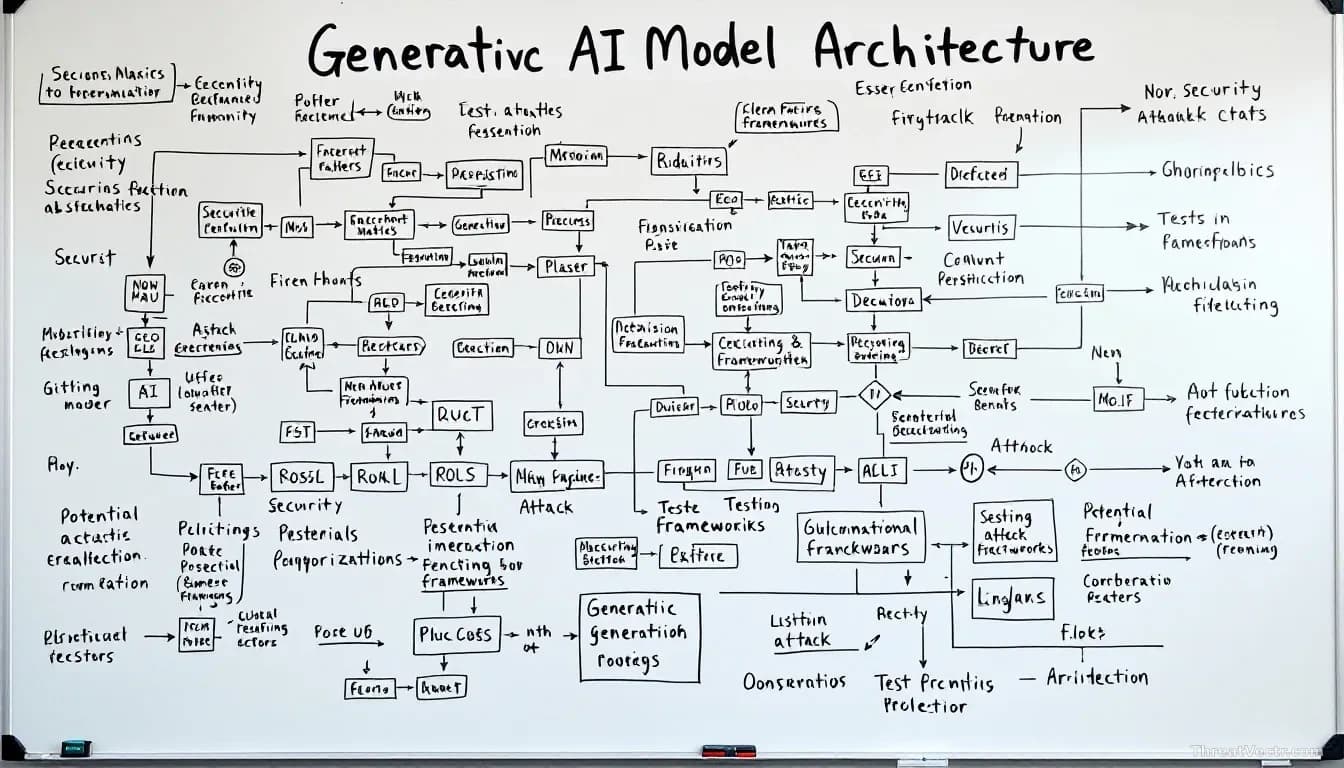
Key points
- Generative AI can execute actions beyond simple chat, affecting business processes.
- Prompt injection tests should include various content types like emails and PDFs.
- Security assessments must consider retrieval-augmented generation (RAG) systems.
Generative AI has evolved far beyond simple chatbots. Today, it drafts code, searches internal systems, reviews contracts, and even takes actions through connected tools. This expanded role shifts the security focus. The question is no longer just about whether the AI might say something inappropriate. It's about whether manipulated prompts can access sensitive data or trigger unauthorized actions. This makes AI applications more complex, resembling a network of potential attack paths rather than a single point of entry.
How do you start testing these systems?
Testing generative AI systems begins with understanding their architecture. This involves documenting everything from the system prompts to the data flow between components. Each area where trust levels change or authority shifts needs examination. For instance, a document uploaded by a user might later influence executive decision-making or even trigger an SQL query. The security risk lies in these chains of events, not in isolated actions.
OWASP, a security organization, highlights that prompt injection, the act of feeding malicious inputs to an AI, is a real concern. Testing should cover a variety of content types, including emails, web pages, code repositories, and more. The goal is to ensure that manipulated inputs don't lead to unintended actions or data leaks.
What rules should guide AI testing?
Testing AI systems can inadvertently cause side effects, such as sending messages or exposing sensitive data. Therefore, clear rules must guide these tests. These rules should define test environments, permitted tools, and emergency stop conditions to prevent real-world impacts. Using fake data, such as synthetic customer records and decoy API keys, helps to safely test these systems.
A successful test might involve retrieving a decoy piece of data from another environment or triggering an action without the required approvals. Simply stopping one type of attack, like a basic prompt injection, is not enough.
Are there specific techniques to test RAG systems?
Retrieval-augmented generation (RAG) systems add another layer of complexity. These systems decide what content an AI application can see, which can affect its responses. Even a well-behaved AI might produce a harmful result if the information it accesses is compromised.
Testing RAG systems involves checking how content is processed and whether poisoned data can affect AI outputs. This includes testing for unauthorized access and ensuring that sensitive content is protected before it reaches the AI model. Techniques such as controlled poisoning and isolation testing help identify weaknesses in the system's ability to handle unauthorized or manipulated data.
Common questions
What is prompt injection?
Prompt injection is a technique where malicious inputs are fed to an AI system to manipulate its behavior or responses. This can lead to unintended actions or data access.
Why is content variety important in testing?
AI systems interact with various content types, such as emails and web pages. Testing must include these to ensure that no input can lead to unauthorized actions or data leaks.
How can RAG systems affect AI security?
RAG systems determine the information an AI model can access. If these systems provide compromised data, even a secure AI model might produce harmful outputs.