Militaries Want Autonomous Weapons Fast. The Data Pipes Behind Them Are the Weak Link.
Defence ministries are pouring money into drones and robots that can think for themselves. The information systems feeding those machines haven't caught up.
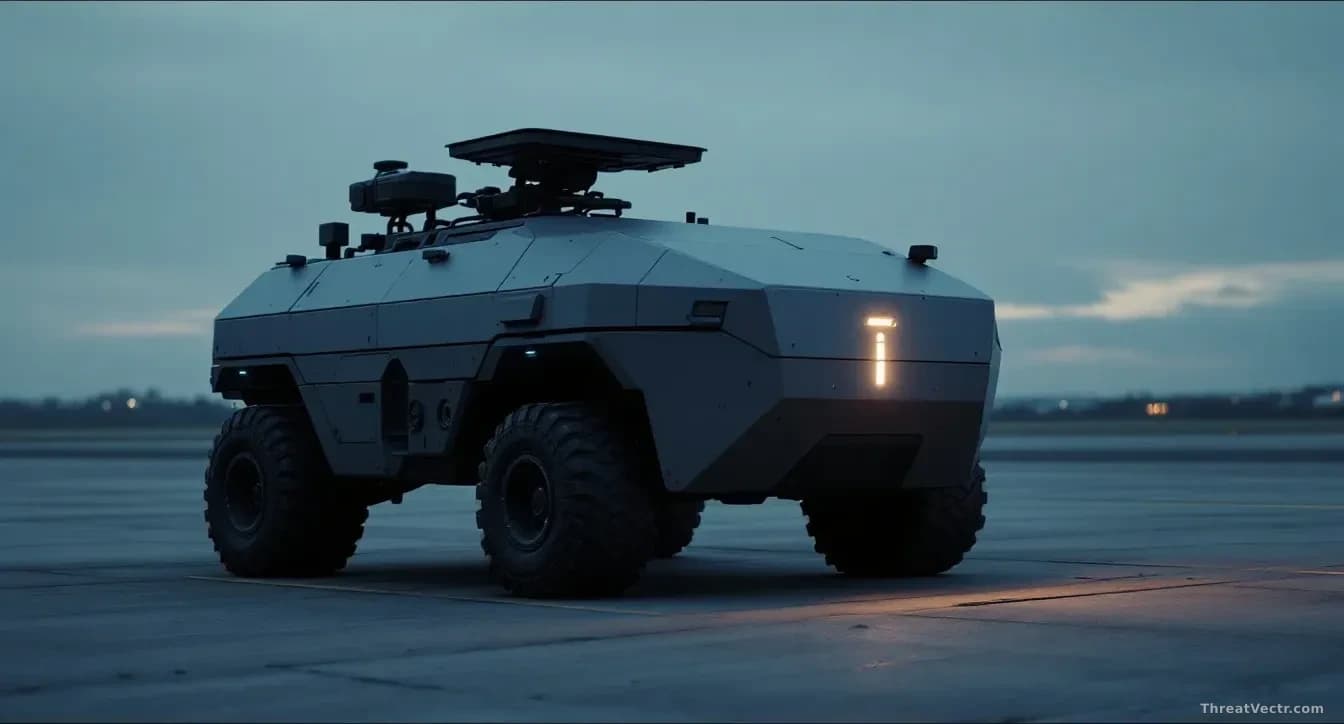
Key points
- The US, UK and NATO are pushing to field autonomous military systems, machines that can operate without a human at the controls, faster than traditional procurement allows.
- Defence buyers are rewriting acquisition rules to move programmes from prototype to frontline use at what officials call commercial speed.
- The bottleneck is now trusted information infrastructure: the networks, data feeds and identity checks that tell an autonomous system what is real and what is not.
- Poisoned or spoofed data feeds could cause an autonomous system to misidentify targets or take actions its operators never sanctioned.
- Speed without verification creates a new class of supply-chain risk unique to military artificial intelligence.
Military planners have a new obsession, and it isn't the drones themselves. It's the plumbing behind them.
Across the US, UK and NATO, defence departments are under political pressure to field autonomous systems, meaning machines that can sense, decide and act without a human pressing a button, at a pace that would've been unthinkable five years ago. Budgets are climbing. Acquisition rules are being rewritten. Contracts that once took a decade are being pushed through in months.
The finish line is clear: get autonomous capability deployed before adversaries do the same. What's getting less airtime is whether the information these machines rely on can actually be trusted.
Why does the data pipeline matter more than the robot?
Because an autonomous system is only as good as what it is told.
A self-driving reconnaissance drone doesn't see the world directly. It sees a stream of data: satellite positioning, sensor feeds, mapping updates, target libraries, friendly-force locations. If any part of that stream is wrong, whether by accident or by tampering, the drone acts on a lie.
That's the problem defence officials are now waking up to. Fielding hardware quickly is one job. Making sure the data feeding it hasn't been corrupted somewhere along the supply chain is a separate, and much harder, one. Our July story "Give an AI a Body and You Give It an Attack Surface" found the same gap in commercial robotics: audit standards trail deployment by years. Military timelines are compressing that gap further.
The sector calls the solution trusted information infrastructure: the networks, identity checks and data-verification systems that sit between a sensor in the field and the algorithm making a decision.
What could go wrong in practice?
Quite a lot, and none of it is theoretical.
An attacker who slips false coordinates into a mapping feed could send an autonomous vehicle the wrong way. A tampered target library could tell a system that a civilian truck matches a hostile profile. A compromised software update, delivered through a trusted contractor, could rewrite behaviour across an entire fleet overnight.
These aren't exotic attacks. They're the same supply-chain and data-integrity problems that have hit hospitals, energy firms and government agencies for years. The difference is the consequence. A poisoned spreadsheet in a corporate finance system causes a bad quarter. A poisoned data feed in a lethal autonomous system causes something far harder to describe or reverse.
Who is responsible for fixing this?
Responsibility is spread thinly, and that's part of the problem.
In the US, oversight sits across the Department of Defense, individual service branches and a growing web of commercial contractors. The UK's Ministry of Defence has been building dedicated AI and autonomy units, but assurance rules for the data those units depend on are still being written. NATO has issued principles for responsible use of military AI, yet turning principles into verifiable engineering standards is slow work.
Meanwhile the contracts keep landing. Vendors are being asked to deliver working autonomy now, with the trust layer promised as a follow-on. That sequencing worries people inside the community: once a system is fielded, ripping out its data pipeline to rebuild it properly isn't really an option.
Should you worry?
If you work in defence supply chains, yes. The risk here isn't some future capability. It's today's procurement timelines meeting yesterday's data-assurance thinking. On 1 June we reported that senior US military officers were already divided on whether battlefield AI was ready for deployment. The data-pipeline question is the same argument, just further downstream and with less visibility. Watch whether assurance standards get written into contracts before systems go live, or quietly deferred until the next incident makes them unavoidable.