Interpol Arrests 58 in Operation Jackal IV, Targeting West African Fraud Networks
A 22-country sweep disrupted the money-laundering infrastructure and online scam operations behind some of the world's most prolific fraud gangs, with preliminary results pointing to a strategic shift toward dismantling criminal support systems rather than counting arrests.
Key points
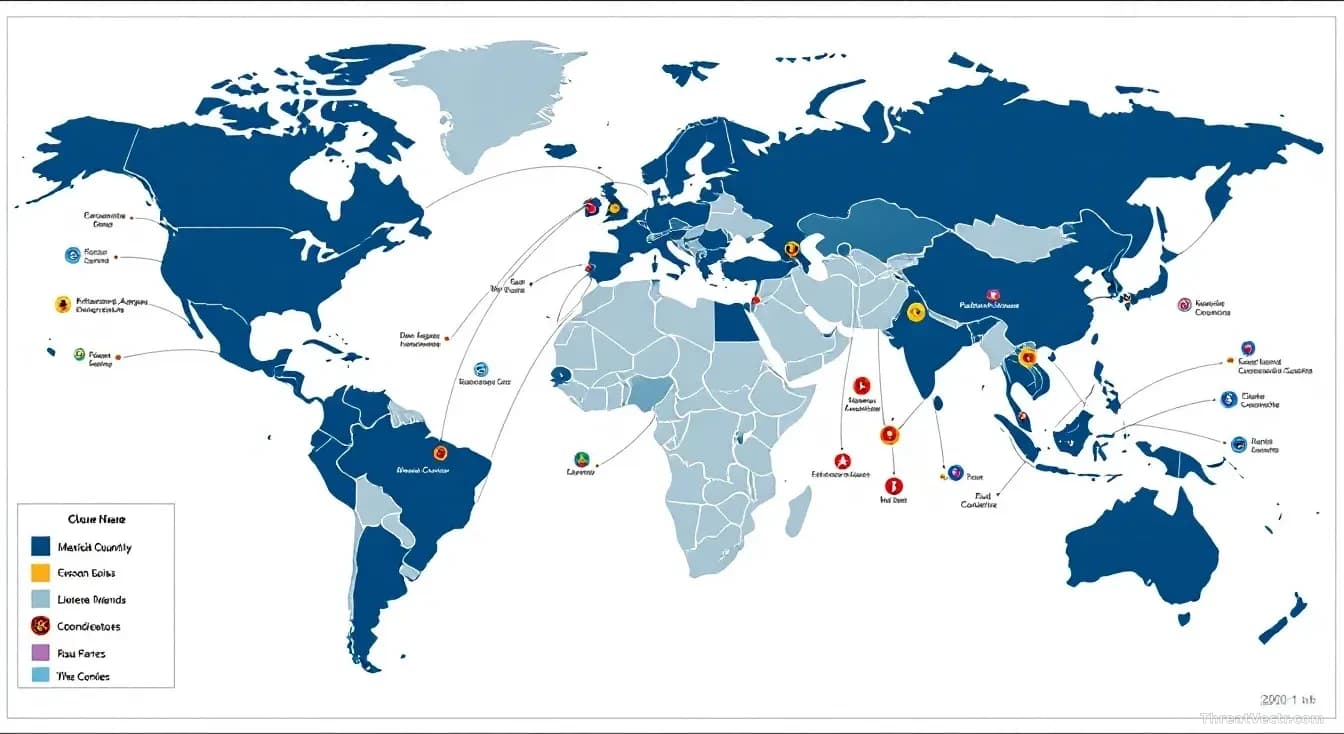
- Interpol's Operation Jackal IV involved 22 countries across six continents, producing 58 arrests and identifying 263 more suspects.
- South African authorities seized $2.67 million and arrested 39 people linked to romance and investment scams aimed at retirees.
- In Argentina, 17 people were arrested in connection with a suspected Crime-as-a-Service network, meaning a group that sells criminal tools and services to other criminal gangs for a fee.
- Romanian police arrested 11 people who ran a fake call centre promising high returns on stocks and cryptocurrency.
- Results are preliminary; Interpol says many cases remain under active investigation.
Some of the world's most active online fraud gangs have taken a hit. Interpol announced the preliminary results of Operation Jackal IV, a coordinated sweep involving law enforcement from 22 countries, targeting West African organised crime groups known for running scams that drain bank accounts and ruin lives.
The operation produced 58 arrests and identified 263 further suspects. It's the fourth in a Jackal series that began in 2022. We first reported on this operation on 25 August, when South African authorities seized $2.67 million from a syndicate that targeted retirees; those figures remain unchanged in Interpol's updated release.
Who is behind these scams?
Authorities have long focused on Black Axe, a transnational criminal network of Nigerian origin. Interpol describes Black Axe and similar West African groups as responsible for "a significant share of the world's cyber-enabled financial fraud." Their methods include business email compromise (where criminals impersonate company executives or suppliers to trick employees into wiring money to a fraudulent account), romance scams, fake investment schemes, and money laundering.
Black Axe isn't a loose collection of opportunists. It operates with defined roles, regional chapters, and increasingly outsourced support from specialist criminal service providers.
What happened in each country?
| Country | Action taken | Key figure |
|---|---|---|
| South Africa | 39 arrested; 7 locations raided in Johannesburg | $2.67 million seized; 257 bank accounts blocked |
| Argentina | 17 arrested; 196 identified | Suspected Crime-as-a-Service network providing website domains and money-laundering support |
| Romania | 11 arrested; call centre dismantled | ~$379,000 in cash and cryptocurrency seized, plus six properties and luxury watches |
| Italy | 1 individual identified | One account allegedly laundered $736,000 through shell companies and cash withdrawals |
The South African operation is worth pausing on. Investigators raided seven addresses in Johannesburg linked to a syndicate that ran romance and investment scams specifically aimed at retirees in English-speaking countries. The syndicate assigned members specialised roles as "conversion" or "retention" agents at different stages of the con, a level of organisation that mirrors a legitimate sales operation.
Should ordinary people worry about these scams?
Yes, and the retiree targeting in South Africa is a reminder of who gets hurt most. Romance scams, where criminals build fake online relationships over weeks or months before asking for money, cause genuine financial devastation. So do fake investment platforms, which show fabricated profits to encourage larger deposits.
If you're approached online by someone you've never met who eventually mentions an investment opportunity or asks for money, treat it as a warning sign. The same applies to unsolicited calls promising high returns on stocks or cryptocurrency.
Operation Jackal IV also flagged a rise in West African criminal groups targeting minors with sextortion schemes, where young people are manipulated into sending compromising images that are then used to extort money from them or their families. Parents and carers should know this threat is growing.
Did the operation succeed?
Fewer arrests than earlier Jackal operations, but the strategy shifted deliberately. Alexander Leslie, principal intelligence analyst at Recorded Future, put it plainly: "Arresting an individual fraudster removes one operator. Understanding and disrupting the infrastructure that dozens of operators depend on can degrade an entire ecosystem." Rafe Pilling, senior director of threat intelligence at Sophos, told Dark Reading the design was meant to "map and disrupt," arguing that exposing the facilitators who supply criminal networks with tools can be more valuable long-term than headline arrest numbers.
The Argentina find matters here. Criminal groups are increasingly outsourcing key functions, sometimes through the dark web, to external providers. Jackal IV's real value may be the intelligence it built about those providers, not the 58 people who are now in custody.