Fake Wi-Fi Network on Delta Flight Triggers Federal Investigation After DEF CON
Someone on a Las Vegas-to-Atlanta flight set up a rogue wireless network called 'Delta WiFi Fast' that led passengers to a fake login page. The FBI is now involved, and suspicion is falling on attendees of DEF CON, the annual hacker conference held days earlier.
Key points
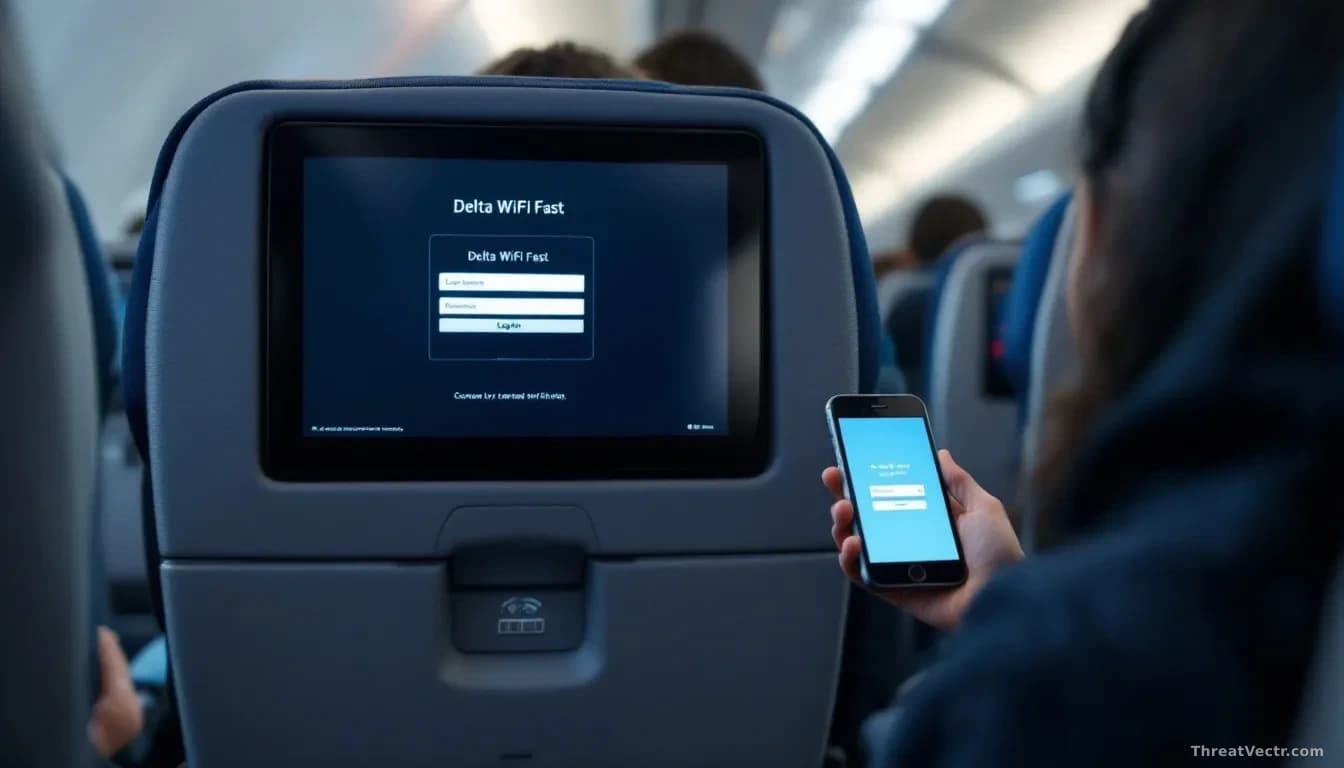
- A passenger on Delta Air Lines Flight 591 from Las Vegas to Atlanta created a fake Wi-Fi network named "Delta WiFi Fast" that directed other passengers to a phishing page, meaning a fake login screen designed to steal usernames and passwords.
- Federal authorities are investigating; no arrest had been announced at the time of writing.
- Academic researchers revealed a coin-sized device costing under $100 could be plugged into a maintenance port on a Boeing 737 to manipulate its flight-management computers.
- The Trump administration issued a memo instructing the Department of Justice and the Department of Homeland Security to explore contracting private companies to "hack back" against criminal organisations.
- UBlock Origin, a widely used free ad-blocking browser extension, stopped filtering Facebook ads after a surge of scams on Meta's platforms made the task unworkable.
What happened on the Delta flight?
Somebody on board stood up their own hotspot, named it "Delta WiFi Fast" to blend in, and pointed passengers to what looked like a Google login page. That's a classic phishing trap: a fake page imitating a trusted brand to capture credentials. We first reported the incident on 11 August in "Delta Investigates Rogue Wi-Fi Network on Flight Carrying DEF CON Attendees"; this follow-up confirms federal investigators are now involved.
The flight departed Las Vegas shortly after DEF CON 34, a major annual conference where tens of thousands of security researchers gather. Crew members pointed suspicion at conference attendees.
The hardware most likely used is a Wi-Fi Pineapple, a small, cheap device sold openly at DEF CON and designed for testing wireless network security, though it can be misused to create fake hotspots. Setting one up on a plane full of security researchers was not a subtle move.
As originally noted by Dark Reading, the practical damage was probably limited: too few passengers to make credential harvesting worthwhile, and a significant chunk of those passengers would've recognised the trap immediately. The legal exposure is a different matter. Creating a fraudulent network on a commercial aircraft is a federal offence, and the FBI's involvement confirms authorities aren't treating this as a prank.
Should passengers on that flight be worried?
Anyone who connected to "Delta WiFi Fast" and typed in a username and password should act now. Change the password you entered, and change it on every other account where you reuse it. Check your email for unexpected login alerts. If the portal appeared to be for a banking or payment service, contact that provider directly.
For everyone else: on any flight, verify the exact network name with a crew member before connecting, and don't enter a password on an in-flight portal unless you're certain it's the airline's genuine network. Our earlier look at hotel Wi-Fi credential harvesting is a useful reminder that the same trick works just as well on the ground.
Three stories in one week
| Story | Key detail |
|---|---|
| Delta Flight 591 Wi-Fi incident | Fake hotspot; FBI investigating |
| Boeing 737 research (Usenix conference) | Sub-$100 device could reach flight-management computers via a maintenance port |
| Trump administration "hack-back" memo | DOJ and DHS directed to explore private-sector offensive operations against criminal groups |
| uBlock Origin Facebook decision | Extension drops Facebook ad filtering after scam volume made it untenable |
The Boeing research, presented at the Usenix academic security conference, showed a coin-sized device plugged into a port beneath the pilot's seat could potentially send commands to the aircraft's flight-management system, the computer handling autopilot and navigation. Boeing's position was that exploiting this would effectively require cockpit access first. Fair point, though Boeing's credibility on safety questions isn't exactly at a high point right now.
The hack-back memo raises a different set of concerns. Licensing private companies to run offensive cyber operations against foreign criminal groups blurs the line between intelligence work and commercial contracting, a distinction legal scholars have argued matters enormously when it comes to escalation and misattribution.
What affected passengers should do
Change any password you typed into the fake portal. Enable two-factor authentication, meaning a second verification step such as a text-message code, on every important account. Watch bank statements for the next 30 days. If you use a password manager, have it generate a fresh, unique password for each site rather than recycling one you may have entered on the plane.