Fake Student Finance Texts Are Targeting New Students Right Before Their Loan Drops
Criminals are sending convincing fake messages about bank-detail changes to students waiting on their first maintenance loan payment. Here is what is actually going on.
Key points
- Scammers are sending fake text messages to students in the days before the UK's September student maintenance loan payments arrive.
- The texts impersonate Student Finance England, warning of an unauthorised bank-detail change to trigger a panicked call or click.
- The September payment window distributes roughly £2.6 billion, making it the most concentrated target of the year.
- Students who respond risk handing criminals the account access needed to redirect their loan payment entirely.
- No genuine Student Finance communication will ask you to confirm personal details over a call you did not initiate.
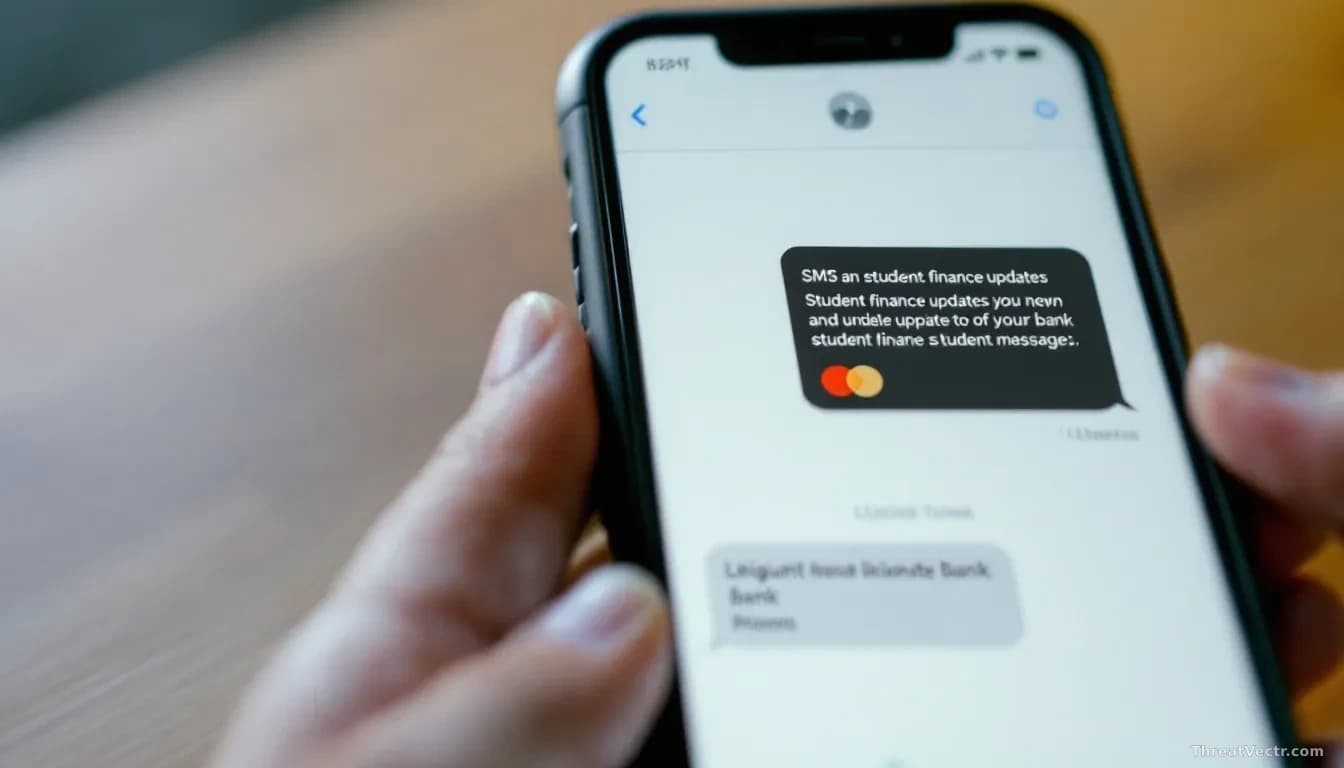
The timing is deliberate. A few days before the first student loan payment of the academic year lands, a text arrives. It says your bank details were changed without your permission on a specific recent date and tells you to call immediately. The date feels real. You are already anxious about money. That is exactly the combination criminals are counting on.
What is the scam actually doing?
The fake message is a form of smishing, which means phishing carried out by text message rather than email. Phishing is where criminals pretend to be a trusted organisation to trick you into handing over personal information or account access. The goal here is to get a panicking student on the phone with a fake "Student Finance" agent, who will ask for login credentials or personal details.
Once they have those, they can log into the real Student Finance England portal and change the bank account on file to one they control. The next loan payment goes straight to them. We covered a near-identical phone-based technique in our 31 August story on bank impersonation scams, which is worth reading for a concrete picture of how these calls unfold.
Why does this happen every September?
Student Finance England releases maintenance payments, the funds covering rent and living costs, in bulk at the start of each term. The Guardian reported on the scale of this window: roughly £2.6 billion goes out in September alone. That single concentrated payout is an obvious magnet.
The failure mode is structural. Millions of first-year students are waiting on money they have never received before, from a system they have never used, arriving in a window they cannot pin down exactly. That uncertainty makes a warning text feel credible rather than suspicious.
Should students be worried, and what should they actually do?
This is a real and active threat, but one you can sidestep by following one rule: never act on an unsolicited message. If a text or call claims there is a problem with your Student Finance account, go directly to the official Student Finance England website by typing the address yourself. Log in. Check whether anything has actually changed.
Student Finance England will not contact you out of the blue and ask you to confirm your password or national insurance number in that same interaction.
If you have already responded to one of these messages, contact your bank immediately using the number on the back of your card and report it to Action Fraud, the UK's national fraud reporting service.
The post-mortem on these cases tends to say the same thing: the student knew something felt off but called the number in the text anyway. Don't call the number in the text.