AI-Faked Photos of a PNG Celebrity Are Fuelling Facebook Scams. Her Country Is Racing to Catch Up.
Jennifer Baing found nearly 100 fake accounts using AI-altered images of her to steal money from strangers. Papua New Guinea wants new laws. Its cybercrime unit has seven officers.
Key points
- Jennifer Baing, a Papua New Guinea television host, identified close to 100 fake Facebook accounts using her name and AI-manipulated photos as of mid-2025.
- PNG's government plans to introduce amendments to its Cybercrime Code Act in November 2026, targeting AI-generated sexual images, fraudulent voice cloning and digital impersonation.
- PNG's dedicated cybercrime unit has just seven officers to cover a population of roughly 10 million people.
- PNG Assistant Commissioner of Police Hodges Ette confirmed he personally saw a deepfake image of three clothed women that reappeared days later showing them naked.
- Fiji, Tonga, PNG and Vanuatu have all signed the Budapest Convention on Cybercrime, a treaty that lets member countries share digital evidence across borders.
Jennifer Baing was scrolling Facebook when she found a photo of herself in revealing lingerie. It was completely fabricated.
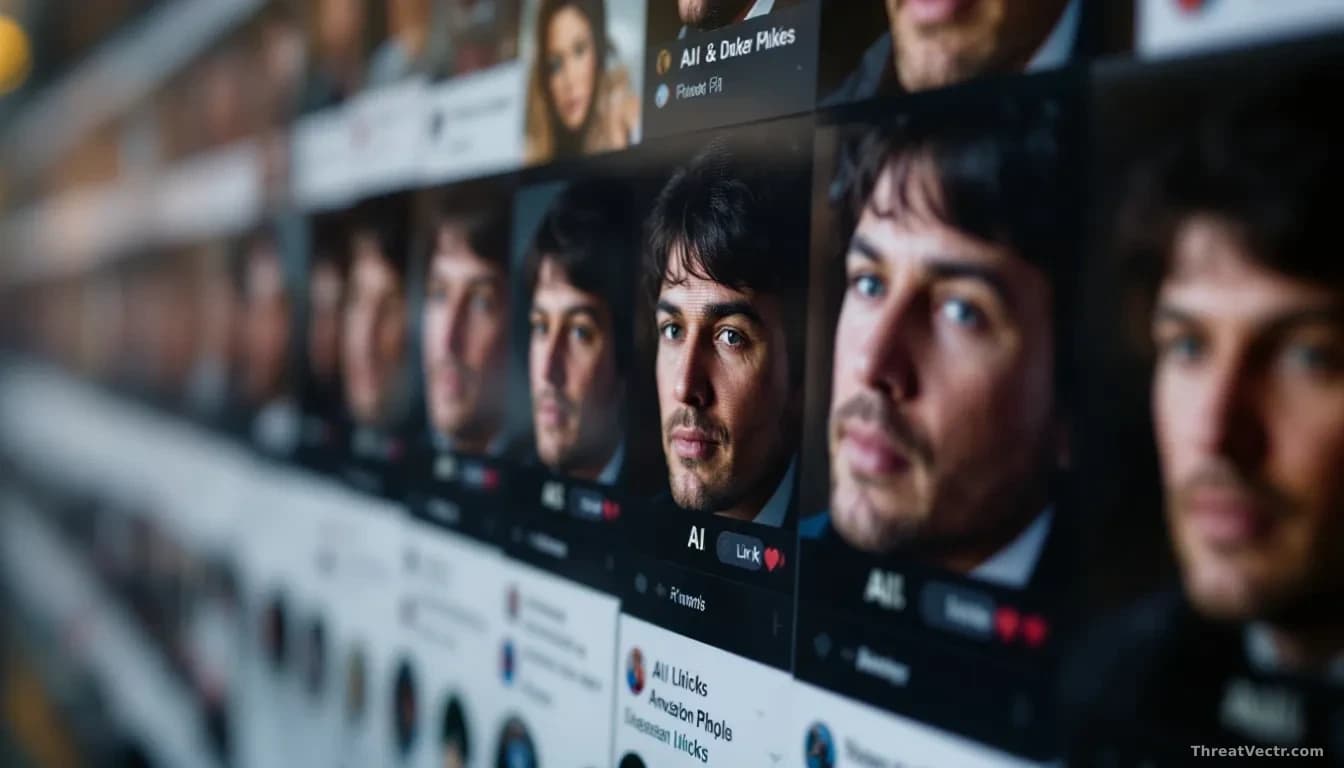
Criminals had used AI tools to manipulate photographs taken from her public social media accounts. Baing's a well-known former television host in Papua New Guinea, with a large following built around traditional food and farming content. The fake images showed her apparently handing out cash, used to advertise giveaways that never paid out. Victims were asked to send money first.
"Our photos are being abused, and our public standing is being abused by these scammers," Baing told ABC News Australia.
She'd found close to 100 fake accounts impersonating her. Reported them repeatedly. They stayed up.
Why should ordinary people care about what happened to one celebrity?
Because the same technique works on anyone with a public photo online. Criminals need only a few pictures. AI tools swap faces onto other bodies or generate entirely new images that look believable at a glance, then those images run scams or produce sexual content of people who never consented.
PNG Assistant Commissioner Ette described a case he saw personally: a photo of three fully clothed young women that reappeared days later with their clothing removed. He said young women had died by suicide after images like this circulated. "The level of stress mentally is so serious," he said.
The failure mode here is visibility. A scam running on a hundred fake accounts, reported by the real person whose face is being used, still online. That's a platform moderation problem as much as a law enforcement one. We covered Meta's opt-out approach to AI image remixing on 9 July, in a story that found the burden sits firmly with the person being depicted.
Should you worry?
PNG plans to address the law side in November, with amendments to its Cybercrime Code Act that would specifically criminalise AI-generated sexual images, fake voice recordings used to commit fraud and digital impersonation. Vanuatu updated its Harmful Digital Communications Act last year. Samoa has no standalone cybercrime law, though its government lists fixing that as a priority under its 2026 National Cybersecurity Strategy.
New laws help. Seven officers covering 10 million people is the operational reality. Every post-mortem on enforcement gaps says the same thing: the rules existed before the capacity to enforce them did.
If you see an offer asking you to send money first to receive a larger prize, that's a scam. Report the account. Don't send money.
Operational takeaway: Platform reporting tools aren't a fix if platforms don't act. Victims need a direct escalation path, not a ticket queue.