A Stolen Phone Number Nearly Took Over Someone's Entire Digital Life
A real-world SIM swap attack shows how quickly identity checks break down once a criminal gets hold of your phone number.
Key points
- SIM swap fraud, where criminals trick a mobile carrier into moving a victim's phone number to a device they control, nearly resulted in a full account takeover in this documented case.
- The attack exposed a core weakness: most services check your identity at login and never reassess.
- Security teams that monitor trust throughout a session are better placed to catch these attacks mid-flow.
- Ordinary customers face real financial harm when phone numbers, used as a second form of identity proof, fall into criminal hands.
Your phone number is more powerful than most people realise. Banks use it to send one-time codes. Email providers use it to confirm it's really you trying to reset a password. Lose control of that number and you can lose control of almost everything tied to it.
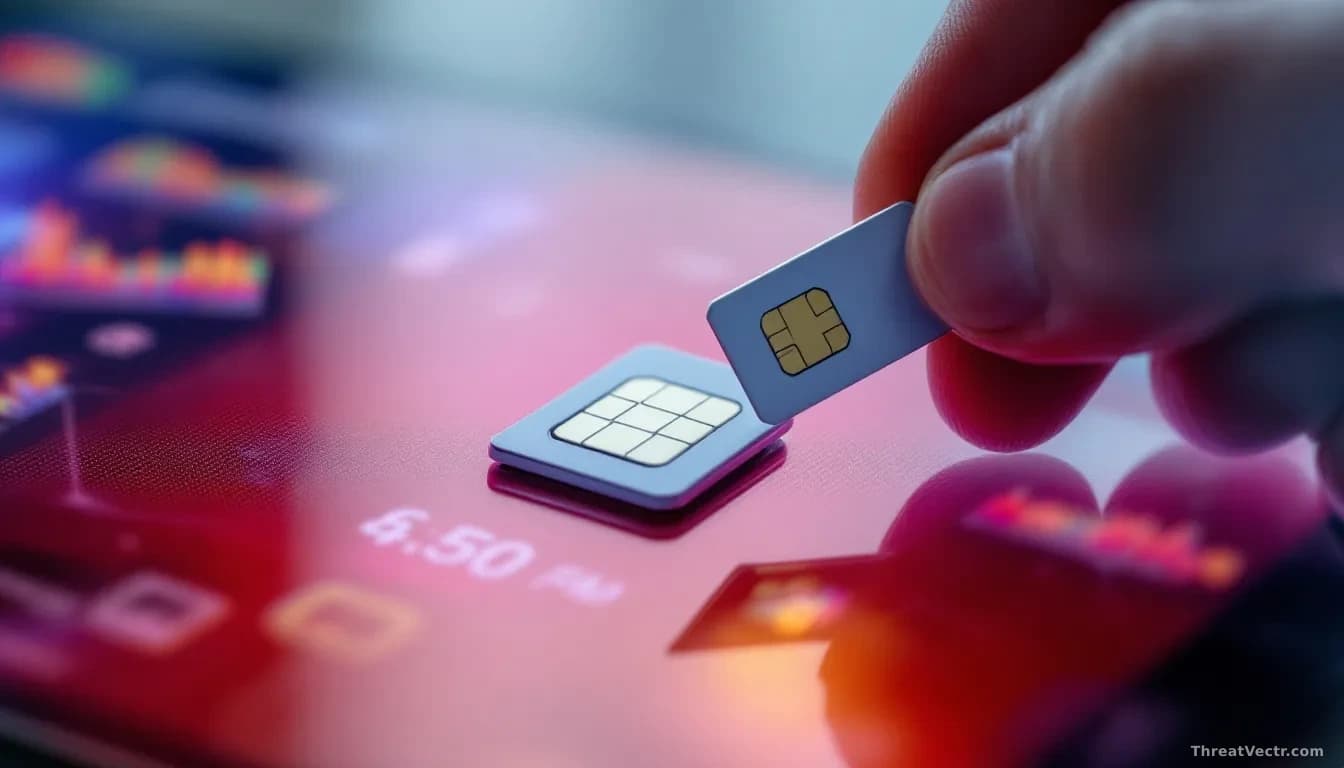
That's exactly what a SIM swap attack exploits. The criminal calls your mobile carrier, pretends to be you, and asks for your number to be transferred to a new SIM card, a small chip that connects a phone to a network. Once the carrier agrees, every text meant for you goes to the criminal's phone instead.
How does this kind of attack actually unfold?
In the case documented by SecurityWeek, the attacker used the hijacked number to intercept one-time codes guarding the victim's accounts. Those codes are an example of two-factor authentication, a security step where you prove identity using something you know (a password) and something you have (your phone). Once the criminal held the number, that second check was defeated entirely.
Caught, but barely.
What this case really illustrates is that most identity checks happen once and stop. A user logs in, the service decides that's them, and moves on. If anything changes afterward, many systems never notice. We reported on 8 July that attackers are already pivoting to verification steps and help desks as passkeys harden the login itself, and this case is a clean example of why that pivot is working.
Security researchers describe a better approach as continuous verification: watching for warning signs throughout a session rather than only at its start. Unusual location, a sudden device change, a rush of password-reset requests: any of these signals appearing after login should prompt the system to ask questions again.
Should you worry?
For most people the practical response is straightforward. Stop using text messages as your second identity check and switch to an authenticator app, a small program that generates codes without needing a phone signal or a number a carrier can reassign. Most major email and banking apps support this today.
Also worth doing: call your mobile carrier and ask about a SIM lock or a port freeze. Many carriers will add a PIN to your account that blocks number transfers without extra verification.
This attack didn't require sophisticated tools. It required a phone call and a convincing story. That gap between technical sophistication and real-world damage is exactly what makes this category of fraud so persistent.