A Safety Recall on a Truck Brake Controller Was Also Quietly Fixing Security Flaws
NMFTA researchers found that a Bendix EC-80 recall patched serious software vulnerabilities, including one that could let an attacker run their own code on a commercial truck's braking system, with no cybersecurity advisory ever issued.
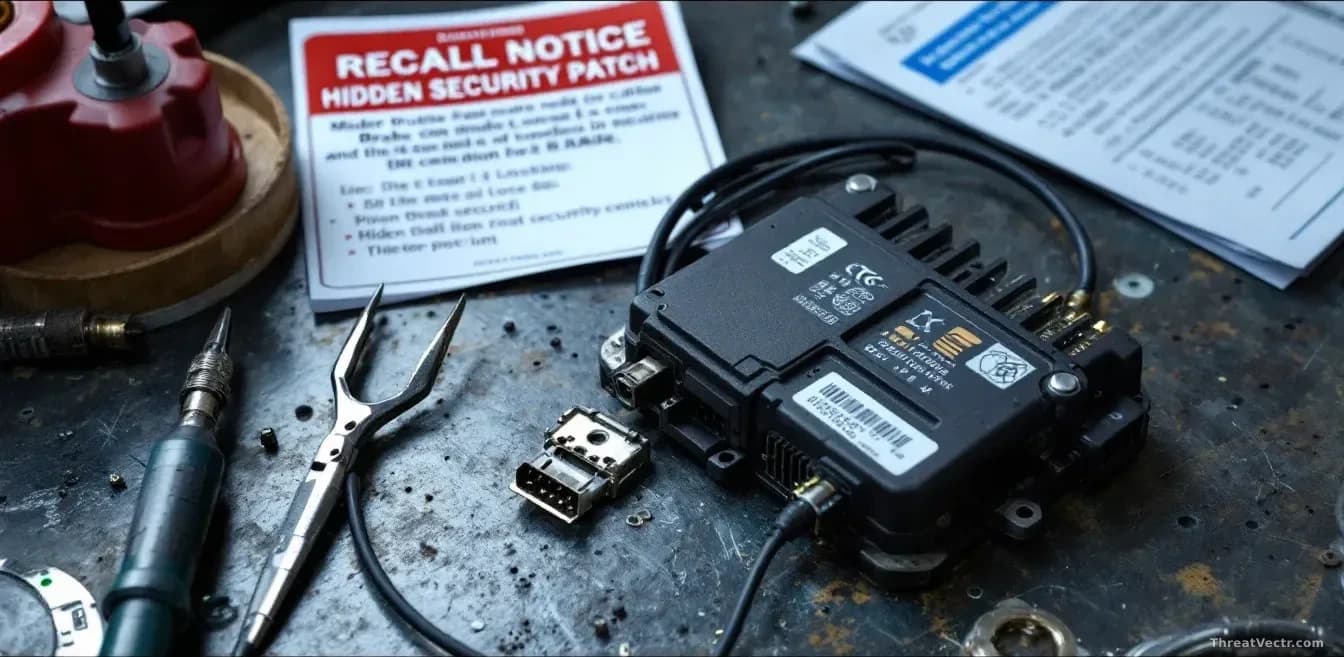
Key points
- Researchers at the National Motor Freight Traffic Association (NMFTA) found that a safety recall for the Bendix EC-80 brake controller also fixed undisclosed cybersecurity vulnerabilities.
- The hidden fixes addressed remote code execution flaws, meaning bugs that could allow an attacker to run malicious software on the braking controller.
- A denial-of-service vulnerability was also patched, meaning attackers could potentially crash or freeze the controller's software.
- The security fixes were bundled into a recall framed around safety, with no public cybersecurity advisory issued alongside it.
- Commercial truck operators received no separate warning that their vehicles carried hackable components.
A routine safety recall on a braking system fitted to commercial trucks was covering something else: software vulnerabilities that could let an attacker take control of, or disable, the controller managing a vehicle's brakes.
The National Motor Freight Traffic Association, an industry group researching freight transport security, uncovered the issue while examining the Bendix EC-80, an electronic brake controller, a computer module that manages braking behaviour on heavy trucks and trailers. Bendix issued a recall for the device, but NMFTA's researchers found it quietly patched two classes of security flaw that were never publicly disclosed as such.
What exactly was wrong with the brake controller?
Two vulnerability types were present. The first was a remote code execution flaw: an attacker who could reach the device over a network or wired connection could send it instructions and make it run software of their choosing, a serious problem in a component that governs braking. The second was a denial-of-service vulnerability, where a malicious signal could cause the controller's software to crash or stop responding.
Neither flaw received a CVE identifier, the standard public reference number used to track software vulnerabilities, nor a dedicated cybersecurity advisory from Bendix. The fixes were folded into a safety recall, the kind of notice mechanics and fleet managers look for but that security teams may never read. That's the real problem here: it's not just that the flaws existed, it's that the disclosure path guaranteed the wrong people would find out.
Should truck drivers and fleet owners be worried?
Fleet operators whose vehicles carry the EC-80 should confirm the recall work has been completed. If the software update was applied during the safety recall service, the vulnerabilities are patched. The concern is less about immediate danger and more about transparency: operators had no way of knowing their braking hardware carried hackable software flaws.
For anyone managing a fleet, this is a reason to treat component recalls as potential security events, not just mechanical ones.
| Detail | Information |
|---|---|
| Affected device | Bendix EC-80 electronic brake controller |
| Flaw types | Remote code execution, denial-of-service |
| Public CVE issued? | No |
| Separate security advisory? | No |
| Discovered by | NMFTA researchers |
| Fix delivery method | Safety recall update |
The story, first surfaced by SecurityWeek, points to a wider pattern in vehicle hardware: security patches buried inside safety recalls, invisible to anyone not reading the firmware changelog. We first covered NMFTA's vehicle security research on 7 August 2026.
Vehicle components are computers now. Treating them as anything less creates blind spots that researchers are starting to close.