A journalist scored 25% on an AI fake-image quiz. Experts say that is about average.
A new survey found Americans can barely tell real photos from AI-generated fakes. CBS News consumer investigator Kristine Lazar tried a 12-question quiz and got three right. Here is what that means for the rest of us.
Key points
- Identity verification company Veriff surveyed Americans on their ability to spot AI-generated images and found accuracy was about as reliable as a coin flip.
- CBS News consumer investigator Kristine Lazar scored 3 out of 12 (25%) on Veriff's detection quiz before receiving any guidance.
- After expert coaching, Lazar retook the quiz and improved her score to 8 out of 12.
- Veriff's product director confirmed he cannot score 100% on the quiz himself without specialist software.
Spotting a fake used to be straightforward. An AI-generated image, meaning a photo created entirely by software with no camera involved, would often show distorted fingers or unnatural eyes. Those days are over.
Veriff, which helps businesses confirm that real people are behind online accounts, ran a survey asking ordinary Americans to pick out AI fakes from real photos. People were right about half the time. A coin flip, not a skill.
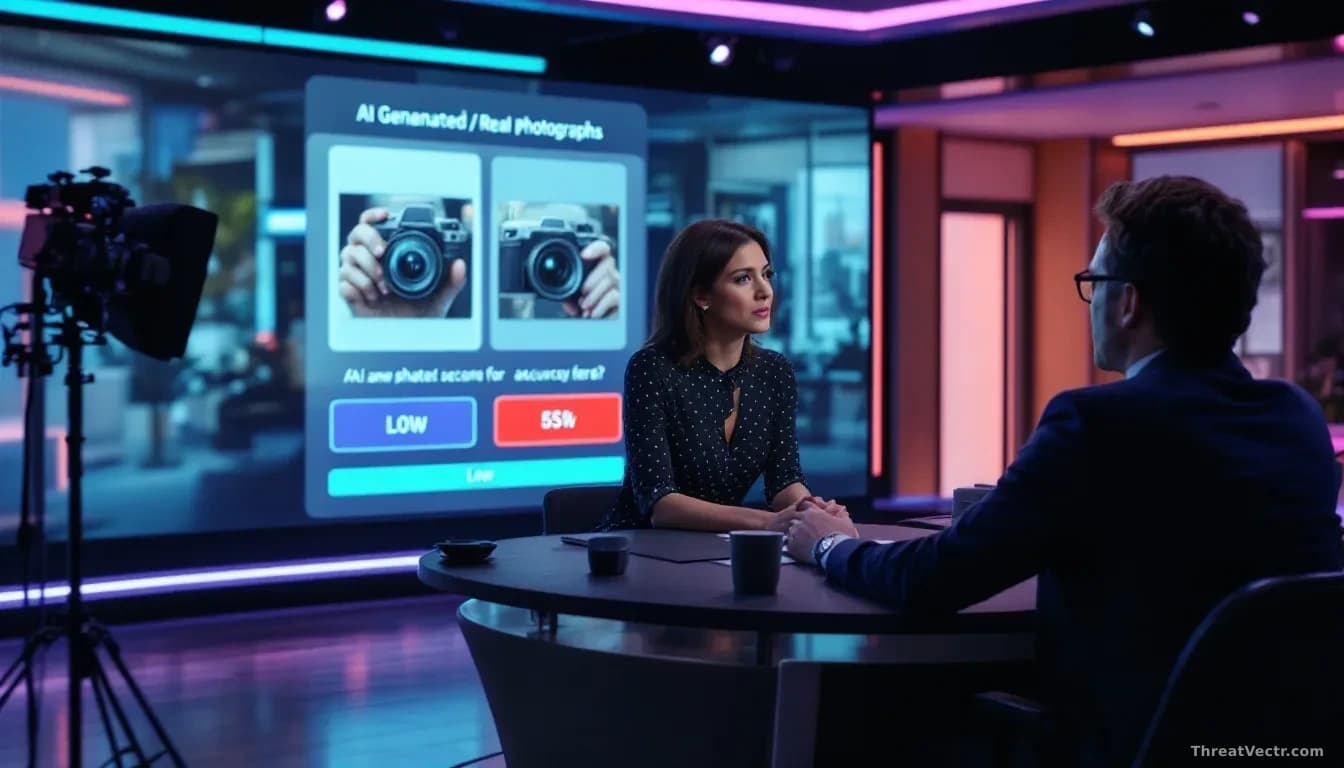
To show what that looks like in practice, Veriff built a 12-question side-by-side quiz and invited CBS News consumer investigator Kristine Lazar to take it. She got three correct, a 25% accuracy rate.
"I've been a consumer investigator for nearly a decade," Lazar said, "but I got an F."
She felt sure about her choices right up until the answers appeared.
Why has spotting AI fakes become so hard?
The software has improved faster than human perception has kept up. Raul Liive, Veriff's product director, said the obvious tells are largely gone because the models generating these images have been trained on vast quantities of real photographs and have learned to avoid old mistakes.
"Right now, the quality is so good," Liive said.
What remains are subtler clues. Liive pointed Lazar toward small inconsistencies in facial texture, clothing patterns that dissolve into the background, and, in video, a person who blinks too rarely or whose movements shift speed in ways real humans do not.
Armed with that advice, Lazar retook the quiz and scored 8 out of 12. She caught one fake by noticing the subject's earrings were slightly different sizes, the kind of detail almost no one registers in passing. Even that improvement left four wrong answers, and Liive admitted he cannot ace the test without extra software.
Should you worry?
Yes, and the stakes extend well beyond quiz scores. Our story on scammers who sent AI-generated photos of a missing man to his parents and demanded $6,000, published 10 July, shows where this capability is already being weaponised against ordinary people. AI-generated fakes are also used to build false identities for fraud and to produce misleading news images at scale.
If trained professionals cannot reliably catch them by eye, neither can the rest of us. Use dedicated AI-detection apps rather than trusting your own judgment. When an image seems designed to provoke a strong reaction or to sell you something, that is a reason to pause and verify.
Seeing, as Lazar put it, is no longer believing.